Back to everyone

People who build AI

Yann LeCun

Turing Award winner and Meta chief AI scientist

4 records

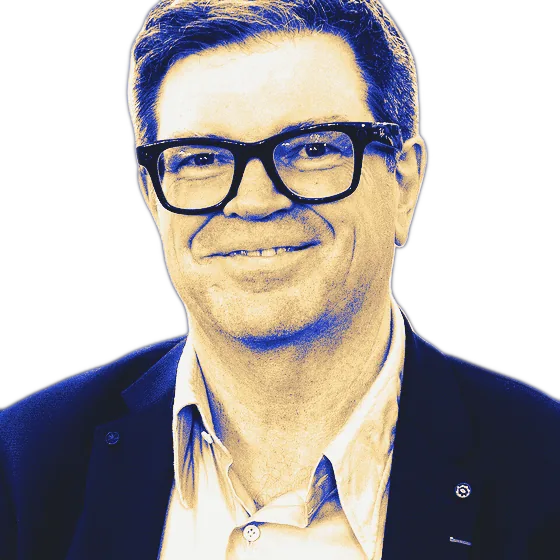
Portrait source: Jérémy Barande, CC BY-SA 2.0

Records

I think we have no idea what the major jobs that we'll hire in 20 years will be. There will be new jobs; we can't imagine them today. But to continue on this picture, everyone's information and interaction with the digital world will be mediated by one of those AI system, which basically will constitute the repository of all human knowledge. That cannot be proprietary; it's too dangerous. It has to be open.

Exact quote, beginning

Yann LeCun

Turing Award winner and Meta chief AI scientist

In a 2023 Senate hearing, Yann LeCun said that if AI systems become the way people access human knowledge, those systems must be open rather than controlled by one company.

Vice President and Chief AI Scientist, Meta Platforms; Silver Professor of Computer Science and Data Science, New York UniversitySeptember 19, 2023U.S. Senate Select Committee on Intelligence open hearing

Context and checks

Surrounding words

Senator King. What about the impact on job loss? Dr. LeCun. What I learned about this is from Daron Acemoglu, whose name was mentioned by Dr. Ding before. I think we have no idea what the major jobs that we'll hire in 20 years will be. There will be new jobs; we can't imagine them today. But to continue on this picture, everyone's information and interaction with the digital world will be mediated by one of those AI system, which basically will constitute the repository of all human knowledge. That cannot be proprietary; it's too dangerous. It has to be open. It has to be open and contributed to by very wide population the way, for example, Wikipedia is produced through crowdsourcing. That's the only way to have enough of a diverse set of views to train those AI systems. They need to be able to speak all of our languages, know about all the world cultures. And this cannot be done by a single private entity. It will have to be open. And it will occur, as long as it's not regulated out of existence, because it's the most natural way things will evolve, the same way they've evolved with the Internet.

What this quote does not say

  • LeCun also distinguished an open basic platform from products built on it and said proprietary AI models have a role; this quote concerns the imagined future knowledge-mediating platform, not every AI model.

How this was checked

  • Quote located in the captured page; spacing normalised for display.

Reviewed by

an AI reviewer that read the whole source · an automatic character-by-character check

As AI technology progresses, there is an urgent need for governments to work together, especially democracies, to set common AI standards and governance models. This is another valuable area where we welcome working with regulators to set appropriate transparency requirements, red teaming standards, and safety mitigations to help ensure those codes of practice, standards, and guardrails are consistent across the world.

Yann LeCun

Turing Award winner and Meta chief AI scientist

In a 2023 Senate hearing, Yann LeCun called for governments, especially democracies, to agree on common AI rules, including transparency requirements and standards for safety testing.

Vice President and Chief AI Scientist, Meta Platforms; Silver Professor of Computer Science and Data Science, New York UniversitySeptember 19, 2023U.S. Senate Select Committee on Intelligence open hearing

Context and checks

Surrounding words

By open sourcing current AI tools, we can develop our research and development ecosystem faster than our adversary. As AI technology progresses, there is an urgent need for governments to work together, especially democracies, to set common AI standards and governance models. This is another valuable area where we welcome working with regulators to set appropriate transparency requirements, red teaming standards, and safety mitigations to help ensure those codes of practice, standards, and guardrails are consistent across the world. The White House's voluntary commitment is a critical step in ensuring responsible guardrails, and they create a model for other governments to follow. Continued U.S.

How this was checked

  • Quote located in the captured page; spacing normalised for display.

Reviewed by

an AI reviewer that read the whole source · an automatic character-by-character check

Statements they signed

FROM THE SIGNED STATEMENT

It could bring risks, including large-scale job displacement, as well as opportunities such as major gains in living standards.

Signed statement:We Must Act Now” (Stanford Digital Economy Lab/economists)

Yann LeCun

Turing Award winner and Meta chief AI scientist

Signed as part of a group statement. Not spoken.

Yann LeCun was listed as a signer of We Must Act Now, which calls for incentives, guardrails, and institutions to steer powerful AI toward complementing people and benefiting society.

Advanced Machine Intelligence LabsDate not establishedWe Must Act Now

Context and checks

Surrounding words

Nagaraj, University of California, Berkeley Jeffrey Sachs, Columbia University Peter McCrory, Anthropic Alex Imas, University of Chicago Stephanie Bell, Partnership on AI Rebecca Finlay, Partnership on AI Gina Raimondo, RAISE US Yann LeCun, Advanced Machine Intelligence Labs John McHale, University of Galway Oskar Nordström Skans, Uppsala University Ebehi Iyoha, Harvard Business School Kevin Bryan, University of Toronto Judy Chevalier, Yale University Shannon Liu,

How this was checked

  • The organiser's own roster lists this person as a signer.

Reviewed by

an AI reviewer that read the whole source

FROM THE SIGNED STATEMENT

We recommend expanded research aimed at ensuring that increasingly capable AI systems are robust and beneficial: our AI systems must do what we want them to do.

Signed statement:Research Priorities for Robust and Beneficial AI” (FLI)

Yann LeCun

Turing Award winner and Meta chief AI scientist

Signed as part of a group statement. Not spoken.

Yann LeCun signed Research Priorities for Robust and Beneficial AI, which calls for more research to ensure increasingly capable AI systems are robust, beneficial, and do what people want them to do.

head of Facebook’s Artificial Intelligence LaboratoryDate not establishedResearch Priorities for Robust and Beneficial AI

Context and checks

Surrounding words

committee on impact of AI and Ethical Issues Demis Hassabis, co-founder of DeepMind Shane Legg, co-founder of DeepMind Mustafa Suleyman, co-founder of DeepMind Dileep George, co-founder of Vicarious Scott Phoenix, co-founder of Vicarious Yann LeCun, head of Facebook’s Artificial Intelligence Laboratory Geoffrey Hinton, University of Toronto and Google Inc.

How this was checked

  • The organiser's own roster lists this person as a signer.

Reviewed by

an AI reviewer that read the whole source