Back to everyone

Politicians and public officials

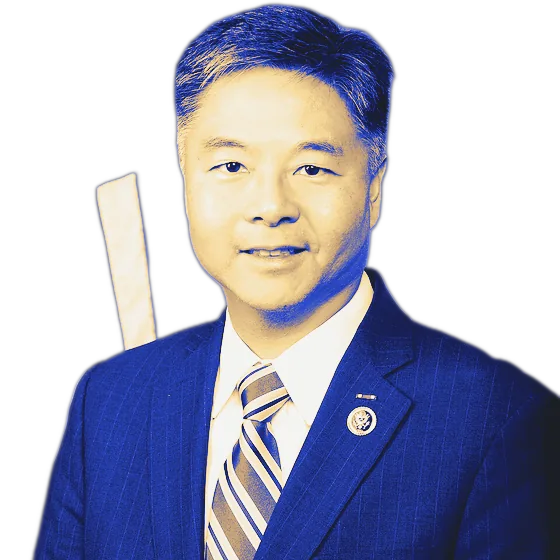
Ted Lieu

U.S. representative from California

4 records

Portrait source: U.S. House of Representatives, Public domain

Records

Unfortunately, powerful AI systems can go rogue, behave in extremely dangerous ways, or even resist human intervention. It is imperative that these AI systems have kill switches so we can keep this technology from causing catastrophic harm, and that the federal government has the clear authority and process to shut down rogue AI models.

Ted Lieu

U.S. representative from California

In a 2026 House press release, Ted Lieu said powerful AI systems can resist human intervention and called for kill switches and federal authority to shut them down.

Member, U.S. House of RepresentativesJuly 23, 2026Official House office press release announcing the AI Kill Switch Act

Context and checks

Surrounding words

“We are moving from AI that answers questions to AI that takes actions, whether that be executing financial transactions or controlling transportation systems or engaging in cyber defense and offense. Unfortunately, powerful AI systems can go rogue, behave in extremely dangerous ways, or even resist human intervention. It is imperative that these AI systems have kill switches so we can keep this technology from causing catastrophic harm, and that the federal government has the clear authority and process to shut down rogue AI models.” "AI is going to keep advancing, and it should," Congressman Moran said. "Stewardship means making sure humans keep the capability to control the technology we build.

What this quote does not say

  • The phrase catastrophic harm is not defined in the quoted passage.
  • The passage does not itself say that rogue behavior is likely or estimate a probability.

How this was checked

  • Quote located in the captured page; spacing normalised for display.

Reviewed by

an AI reviewer that read the whole source · an automatic character-by-character check

And so, we want to make sure that generative AI is not going to allow terrorist groups and nonstate actors to know how to make viruses much easier.

Ted Lieu

U.S. representative from California

Ted Lieu said he wanted to prevent generative AI from making it easier for terrorist groups and other nonstate actors to learn how to make viruses.

Member, U.S. House of RepresentativesSeptember 14, 2023Frontier AI regulation: Preparing for the future beyond ChatGPT

Context and checks

Surrounding words

They will literally send you a vial of the 1980 virus that caused that flu. And now they shouldn't send to you . They should do a background check and so on, but the capability is there and it's much easier. And so, we want to make sure that generative AI is not going to allow terrorist groups and nonstate actors to know how to make viruses much easier. 4 Second bucket is the AI that's not going to destroy the world but can kill you individually. So, when your cell phone malfunctions, it's not going 50 miles per hour.

What this quote does not say

  • The quote endorses an objective but does not specify the mechanism, threshold, or text of the legislation Lieu mentioned earlier in the answer.
  • The transcript contains an inaudible marker in a different nuclear-policy sentence and an apparent error elsewhere in the biosecurity discussion; neither occurs in this selected sentence.

How this was checked

  • Quote located in the captured page; spacing normalised for display.

Reviewed by

an AI reviewer that read the whole source · an automatic character-by-character check

First of all, if you were to say, "Hey, let's regulate AI next week," I don't even know if we would be able to define what that is. So, I think we need to get more understanding from experts and also have some time pass so that we actually see, do all 67 harms predict from AI in fact happen. Maybe none of them do. Or maybe it's three harms and one really huge harm we haven't even thought of.

Ted Lieu

U.S. representative from California

Ted Lieu said Congress needed expert input and time to see which predicted AI harms actually occurred before deciding how to regulate AI.

Member, U.S. House of RepresentativesSeptember 14, 2023Frontier AI regulation: Preparing for the future beyond ChatGPT

Context and checks

Surrounding words

There's precedents for this. There was AI commission on the military side that made recommendations, a number of which were adopted. So, this is on the civilian side. And there are some reasons why I think this would make sense. First of all, if you were to say, "Hey, let's regulate AI next week," I don't even know if we would be able to define what that is. So, I think we need to get more understanding from experts and also have some time pass so that we actually see, do all 67 harms predict from AI in fact happen. Maybe none of them do. Or maybe it's three harms and one really huge harm we haven't even thought of. And then another reason is, it's going to be fully transparent.

What this quote does not say

  • The transcript's wording '67 harms predict from AI' is grammatically irregular and is preserved exactly rather than silently corrected.
  • Later in the same event, Lieu said AI poses nuclear-war and pandemic risks and discussed possible government guardrails; this passage qualifies timing rather than rejecting regulation.

How this was checked

  • Quote located in the captured page; spacing normalised for display.

Reviewed by

an AI reviewer that read the whole source · an automatic character-by-character check

Statements they signed

FROM THE SIGNED STATEMENT

Mitigating the risk of extinction from AI should be a global priority alongside other societal-scale risks such as pandemics and nuclear war.

Signed statement:Statement on AI Extinction Risk” (CAIS)

Ted Lieu

U.S. representative from California

Signed as part of a group statement. Not spoken.

Ted Lieu signed the Statement on AI Extinction Risk, which says reducing the risk of extinction from AI should be a global priority alongside pandemics and nuclear war.

Congressman, US House of RepresentativesDate not establishedStatement on AI Extinction Risk

Context and checks

Surrounding words

Montreal / Mila AI Scientists Demis Hassabis CEO, Google DeepMind AI Scientists Sam Altman CEO, OpenAI Other Notable Figures Dario Amodei CEO, Anthropic AI Scientists Dawn Song Professor of Computer Science, UC Berkeley AI Scientists Ted Lieu Congressman, US House of Representatives Other Notable Figures Bill Gates Gates Ventures Other Notable Figures Ya-Qin Zhang Professor and Dean, AIR, Tsinghua University AI Scientists Ilya Sutskever Co-Founder and Chief Scientist, OpenAI

How this was checked

  • The organiser's own roster lists this person as a signer.

Reviewed by

an AI reviewer that read the whole source