Back to everyone

Doctors, scientists and economists

Stephen Hawking

theoretical physicist and bestselling science author

5 records

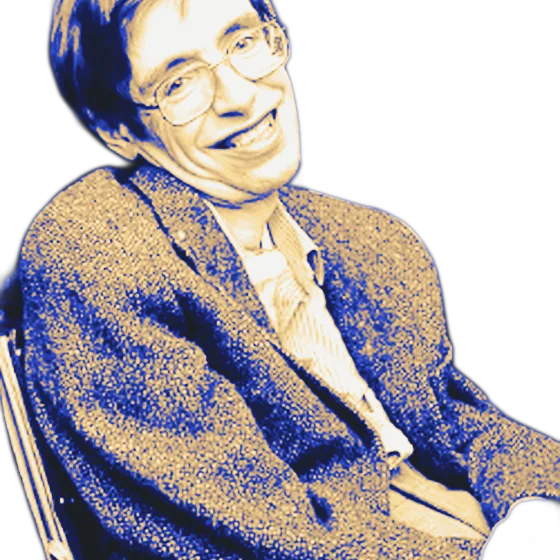
Portrait source: NASA, Public domain

Records

Success in creating AI would be the biggest event in human history. Unfortunately, it might also be the last, unless we learn how to avoid the risks.

Stephen Hawking

theoretical physicist and bestselling science author

From a co-authored text. Not one person's spoken words.

Co-authored with Frank Wilczek

In a 2014 coauthored op-ed, Stephen Hawking wrote that creating AI would be humanity's biggest event and might be its last unless the risks were avoided.

Director of research at the Department of Applied Mathematics and Theoretical Physics at CambridgePublished May 1, 2014 · date of remarks not establishedAuthored opinion article

Context and checks

Surrounding words

to offer is a product of human intelligence; we cannot predict what we might achieve when this intelligence is magnified by the tools that AI may provide, but the eradication of war, disease, and poverty would be high on anyone's list. Success in creating AI would be the biggest event in human history. Unfortunately, it might also be the last, unless we learn how to avoid the risks. In the near term, world militaries are considering autonomous-weapon systems that can choose and eliminate targets; the UN and Human Rights Watch have advocated a treaty banning such weapons.

What this quote does not say

  • The passage is jointly authored with Stuart Russell, Max Tegmark, and Frank Wilczek, so it is attributable to Hawking by coauthorship rather than as a uniquely spoken sentence.

How this was checked

  • Quote matched character-for-character against the captured page.

Reviewed by

an AI reviewer that read the whole source · an automatic character-by-character check

The genie is out of the bottle. We need to move forward on artificial intelligence development but we also need to be mindful of its very real dangers. I fear that AI may replace humans altogether. If people design computer viruses, someone will design AI that replicates itself. This will be a new form of life that will outperform humans.

Stephen Hawking

theoretical physicist and bestselling science author

In a 2017 WIRED interview, Stephen Hawking said AI development should continue but that he feared AI could replace humans and that someone would create self-replicating AI.

Theoretical physicist, cosmologist, author and member of the Starmus Festival advisory boardPublished November 28, 2017 · date of remarks not establishedWIRED interview with Stephen Hawking

Context and checks

Surrounding words

I would also ask him to renounce his denial of climate change. But again, I fear neither will happen as Trump continues to appease his electorate. The genie is out of the bottle. We need to move forward on artificial intelligence development but we also need to be mindful of its very real dangers. I fear that AI may replace humans altogether. If people design computer viruses, someone will design AI that replicates itself. This will be a new form of life that will outperform humans. I worry about the control that big corporations have over information. The danger is we get into the situation that existed in the Soviet Union with their papers, Pravda, which means "truth" and Izvestia, which means "news".

What this quote does not say

  • WIRED does not reproduce the interviewer question or give a separate interview date.
  • The page labels the topic rather than repeating Hawking's name before each response.

How this was checked

  • Quote matched character-for-character against the captured page.

Reviewed by

an AI reviewer that read the whole source · an automatic character-by-character check

We should shift the goal of AI from creating pure undirected artificial intelligence to creating beneficial intelligence. It might take decades to figure out how to do this, so let’s start researching this today rather than the night before the first strong AI is switched on.

Stephen Hawking

theoretical physicist and bestselling science author

Stephen Hawking said AI research should focus on creating beneficial intelligence and begin now because the work could take decades.

Director of research at the Department of Applied Mathematics and Theoretical Physics at CambridgePublished October 8, 2015 · date of remarks not establishedStephen Hawking AMA answers

Context and checks

Surrounding words

When it eventually does occur, it’s likely to be either the best or worst thing ever to happen to humanity, so there’s huge value in getting it right. We should shift the goal of AI from creating pure undirected artificial intelligence to creating beneficial intelligence. It might take decades to figure out how to do this, so let’s start researching this today rather than the night before the first strong AI is switched on. Aaronsaurus • 11y ago Is "beneficial intelligence" a used term academically?

What this quote does not say

  • The source is P4 rather than an institution-hosted transcript.
  • Reddit currently renders only a relative age on open; the day comes from the indexed post date.

How this was checked

  • Quote matched character-for-character against the captured page.

Reviewed by

an AI reviewer that read the whole source · an automatic character-by-character check

Statements they signed

FROM THE SIGNED STATEMENT

One can imagine such technology outsmarting financial markets, out-inventing human researchers, out-manipulating human leaders, and developing weapons we cannot even understand.

Signed statement:Transcendence Looks at the Implications of AI” (Hawking, Russell, Tegmark, Wilczek)

Stephen Hawking

theoretical physicist and bestselling science author

Signed as part of a group statement. Not spoken.

Stephen Hawking co-wrote "Transcendence Looks at the Implications of AI," which says advanced AI could bring enormous benefits or catastrophic risks and calls for more work to make it safe.

director of researchDate not establishedTranscendence Looks at the Implications of AI

Context and checks

Surrounding words

All of us should ask ourselves what we can do now to improve the chances of reaping the benefits and avoiding the risks. Stephen Hawking is the director of research at the Department of Applied Mathematics and Theoretical Physics at Cambridge and a 2012 Fundamental Physics Prize laureate for his work on quantum gravity.

How this was checked

  • The organiser's own roster lists this person as a signer.

Reviewed by

an AI reviewer that read the whole source

FROM THE SIGNED STATEMENT

We recommend expanded research aimed at ensuring that increasingly capable AI systems are robust and beneficial: our AI systems must do what we want them to do.

Signed statement:Research Priorities for Robust and Beneficial AI” (FLI)

Stephen Hawking

theoretical physicist and bestselling science author

Signed as part of a group statement. Not spoken.

Stephen Hawking signed Research Priorities for Robust and Beneficial AI, which calls for expanded research to ensure increasingly capable AI systems are robust, beneficial, and do what people want them to do.

Director of research at the Department of Applied Mathematics and Theoretical Physics at Cambridge, 2012 Fundamental Physics Prize laureate for his work on quantum gravityDate not establishedResearch Priorities for Robust and Beneficial AI

Context and checks

Surrounding words

of Cosmology and Astrophysics, Gruber & Crafoord laureate Huw Price, Cambridge, Bertrand Russell Professor of Philosophy Nick Bostrom, Oxford, Professor of Philosophy, Director of Future of Humanity Institute (Oxford Martin School) Stephen Hawking, Director of research at the Department of Applied Mathematics and Theoretical Physics at Cambridge, 2012 Fundamental Physics Prize laureate for his work on quantum gravity Luke Muehlhauser, Executive Director of Machine Intelligence

How this was checked

  • The organiser's own roster lists this person as a signer.

Reviewed by

an AI reviewer that read the whole source