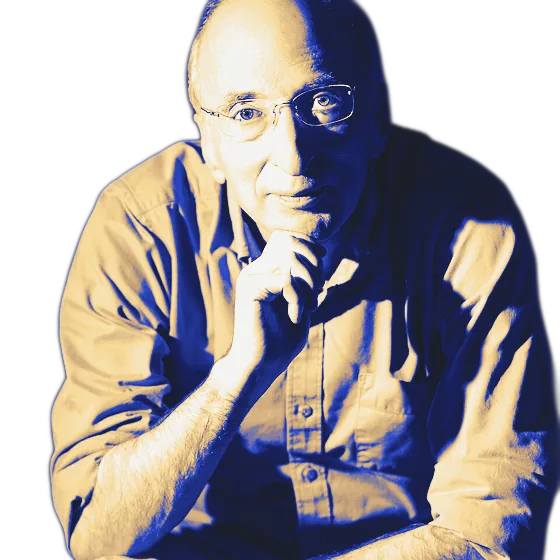
My concerns fall into the category of what happens when we automate anything. AI clearly provides many more opportunities and expectations for automation. However, all the safety engineering that you would do if you were designing a braking system for a car—we haven’t always done that to the same degree for automation.
Saul Perlmutter
Nobel Prize-winning astrophysicist and UC Berkeley physics professor
In an interview published in 2024, Saul Perlmutter said AI creates more opportunities for automation but automation has not always received the safety engineering used for car brakes.
Professor of physics at the University of California, Berkeley, and senior scientist at Lawrence Berkeley National LaboratoryPublished 2024 · date of remarks not establishedIssues in Science and Technology
Context and checks
Surrounding words
I find myself programming in computer languages that I probably would not have bothered with if it weren’t for the fact that I can ask AI for help. What are your concerns about how AI might be used in science? Perlmutter: My concerns fall into the category of what happens when we automate anything. AI clearly provides many more opportunities and expectations for automation. However, all the safety engineering that you would do if you were designing a braking system for a car—we haven’t always done that to the same degree for automation. We need to step back and ask, “Have we done the right due diligence? How could this automation go wrong? What are our indicators that it’s going wrong? And what are the fail-safes to make sure that we catch it if it does go wrong?
What this quote does not say
- Earlier in the interview, Perlmutter said generative AI could speed communication across scientific subdisciplines and described using it for help with programming.
How this was checked
- Quote matched character-for-character against the captured page.
Reviewed by
an AI reviewer that read the whole source · an automatic character-by-character check