Back to everyone

People who build AI

Sam Altman

CEO of OpenAI

4 records

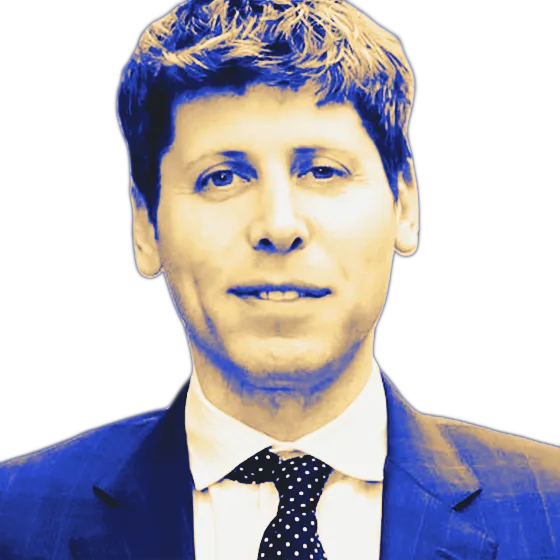
Portrait source: 首相官邸ホームページ / Office of the Prime Minister of Japan Official Website, CC BY 4.0

Records

My worst fears are that we cause significant--we, the field, the technology, the industry cause significant harm to the world. I think that could happen a lot of different ways. It's why we started the company. It's a big part of why I'm here today and why we've been here in the past and we've been able to spend some time with you. I think if this technology goes wrong, it can go quite wrong, and we want to be vocal about that.

Exact quote, beginning

Sam Altman

CEO of OpenAI

At a 2023 Senate hearing, Sam Altman said his worst fears included the possibility that the AI field, technology, and industry could cause significant harm to the world.

Chief Executive Officer, OpenAIMay 16, 2023U.S. Senate Judiciary Subcommittee hearing, Oversight of A.I.: Rules for Artificial Intelligence

Context and checks

Surrounding words

I agree that when we get to very powerful systems, the landscape will change. I think I'm just more optimistic that we are incredibly creative, and we find new things to do with better tools, and that will keep happening. My worst fears are that we cause significant--we, the field, the technology, the industry cause significant harm to the world. I think that could happen a lot of different ways. It's why we started the company. It's a big part of why I'm here today and why we've been here in the past and we've been able to spend some time with you. I think if this technology goes wrong, it can go quite wrong, and we want to be vocal about that. We want to work with the Government to prevent that from happening. But we try to be very clear-eyed about what the downside case is and the work that we have to do to mitigate that. Chair Blumenthal. Thank you. And our hope is that the rest of the industry will follow the example that you and IBM, Ms.

What this quote does not say

  • The passage does not specify an extinction mechanism or probability.
  • The phrase 'quite wrong' is nonspecific; the literal supported claim is significant harm to the world.

How this was checked

  • Quote located in the captured page; spacing normalised for display.

Reviewed by

an AI reviewer that read the whole source · an automatic character-by-character check

Thank you, Senator. Number one, I would form a new agency that licenses any effort above a certain scale of capabilities and can take that license away and ensure compliance with safety standards. Number two, I would create a set of safety standards focused on what you said in your third hypothesis, as the dangerous capability evaluations. One example that we've used in the past is looking to see if a model can self-replicate and self-exfiltrate into the wild.

Exact quote, beginning

Sam Altman

CEO of OpenAI

At a 2023 Senate hearing, Sam Altman called for threshold-based AI licensing, dangerous-capability tests, and independent audits.

Chief Executive Officer, OpenAIMay 16, 2023U.S. Senate Judiciary Subcommittee hearing, Oversight of A.I.: Rules for Artificial Intelligence

Context and checks

Surrounding words

Let me cut---- Professor Marcus [continuing]. Models to be more trustworthy. Senator Kennedy [continuing]. You off, Professor, because I want to hear from Mr. Altman. Mr. Altman, here's your shot. Mr. Altman. Thank you, Senator. Number one, I would form a new agency that licenses any effort above a certain scale of capabilities and can take that license away and ensure compliance with safety standards. Number two, I would create a set of safety standards focused on what you said in your third hypothesis, as the dangerous capability evaluations. One example that we've used in the past is looking to see if a model can self-replicate and self-exfiltrate into the wild. We can give your office a long other list of the things that we think are important there, but specific tests that a model has to pass before it can be deployed into the world. And then, third, I would require independent audits, so not just from the company or the agency, but experts who can say the model is or isn't in compliance with these stated safety thresholds and these percentages of performance on question X or Y. Senator Kennedy. Can you send me that information? Mr. Altman. We will do that. Senator Kennedy. Would you be qualified, if we promulgated those rules, to administer those rules? Mr. Altman.

What this quote does not say

  • The proposal applies only above an unspecified capability scale and is not a blanket licensing proposal.
  • The answer is conditional on Senator Kennedy's stated hypotheses.

How this was checked

  • Quote located in the captured page; spacing normalised for display.

Reviewed by

an AI reviewer that read the whole source · an automatic character-by-character check

No. I think some policy is good. I think it is easy for it to go too far, and as I have learned more about how the world works I am more afraid that it could go too far and have really bad consequences.

Sam Altman

CEO of OpenAI

At a 2025 Senate hearing, Sam Altman said self-regulation was insufficient and some AI policy was good, but policy could go too far and have bad consequences.

Co-Founder and Chief Executive Officer, OpenAIMay 8, 2025U.S. Senate Commerce Committee hearing, Winning the AI Race: Strengthening U.S. Capabilities in Computing and Innovation

Context and checks

Surrounding words

Altman— rules and guardrails are necessary. Are you saying that self-regulation is sufficient at the current moment? Mr. A LTMAN. No. I think some policy is good. I think it is easy for it to go too far, and as I have learned more about how the world works I am more afraid that it could go too far and have really bad consequences. But people want to use products that are generally safe. You know, when you get on an airplane you kind of do not think about doing the safety testing yourself.

What this quote does not say

  • This qualifies Altman's governance stance, not his assessment of catastrophic or extinction risk.
  • He still rejects self-regulation alone and affirms that some policy is good.

How this was checked

  • Quote located in the captured page; spacing normalised for display.

Reviewed by

an AI reviewer that read the whole source · an automatic character-by-character check

Statements they signed

FROM THE SIGNED STATEMENT

Mitigating the risk of extinction from AI should be a global priority alongside other societal-scale risks such as pandemics and nuclear war.

Signed statement:Statement on AI Extinction Risk” (CAIS)

Sam Altman

CEO of OpenAI

Signed as part of a group statement. Not spoken.

Sam Altman signed the Statement on AI Extinction Risk, which says reducing the risk of human extinction from AI should be a global priority alongside pandemics and nuclear war.

CEO, OpenAIDate not establishedStatement on AI Extinction Risk

Context and checks

Surrounding words

Geoffrey Hinton Emeritus Professor of Computer Science, University of Toronto AI Scientists Yoshua Bengio Professor of Computer Science, U. Montreal / Mila AI Scientists Demis Hassabis CEO, Google DeepMind AI Scientists Sam Altman CEO, OpenAI Other Notable Figures Dario Amodei CEO, Anthropic AI Scientists Dawn Song Professor of Computer Science, UC Berkeley AI Scientists Ted Lieu Congressman, US House of Representatives Other Notable Figures Bill Gates Gates

What this quote does not say

  • The roster's wording next to Sam Altman's name is “CEO, OpenAI.”

How this was checked

  • The organiser's own roster lists this person as a signer.

Reviewed by

an AI reviewer that read the whole source