Back to everyone

Military and national security

Richard Danzig

former U.S. secretary of the Navy

2 records

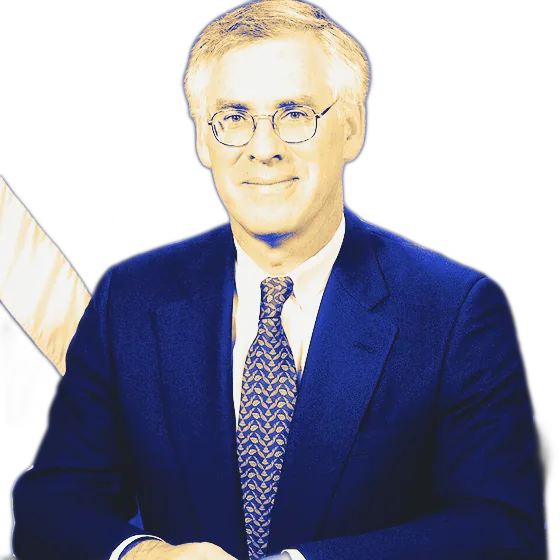
Portrait source: United States Navy., Public domain

Records

This report recognizes the imperatives that inspire the U.S. military’s pursuit of technological superiority over all potential adversaries. These pages emphasize, however, that superiority is not synonymous with security. Experience with nuclear weapons, aviation, and digital information systems should inform discussion about current efforts to control artificial intelligence (AI), synthetic biology, and autonomous systems.

Exact quote, beginning

Richard Danzig

former U.S. secretary of the Navy

In a May 2018 CNAS report, Richard Danzig wrote that military technological superiority is not synonymous with security, and that on a number of occasions and in a number of ways the American national security establishment will lose control of what it creates.

Former Secretary of the Navy and Senior Advisor for the Johns Hopkins Applied Physics LaboratoryPublished May 30, 2018 · date of remarks not establishedTechnology Roulette: Managing Loss of Control as Many Militaries Pursue Technological Superiority

Context and checks

Surrounding words

Summary This report recognizes the imperatives that inspire the U.S. military’s pursuit of technological superiority over all potential adversaries. These pages emphasize, however, that superiority is not synonymous with security. Experience with nuclear weapons, aviation, and digital information systems should inform discussion about current efforts to control artificial intelligence (AI), synthetic biology, and autonomous systems. In this light, the most reasonable expectation is that the introduction of complex, opaque, novel, and interactive technologies will produce accidents, emergent effects, and sabotage. In sum, on a number of occasions and in a number of ways, the American national security establishment will lose control of what it creates. A strong justification for our pursuit of technological superiority is that this superiority will enhance our deterrent power. But deterrence is a strategy for reducing attacks, not accidents; it discourages malevolence, not inadvertence.

What this quote does not say

  • The warning addresses AI together with synthetic biology and autonomous systems; it should not be represented as applying exclusively to AI.
  • The report predicts loss of control and potentially severe consequences but does not estimate a probability or expressly predict human extinction.

How this was checked

  • Quote matched character-for-character against the captured page.

Reviewed by

an AI reviewer that read the whole source · an automatic character-by-character check

Most demandingly, the United States also must work with its opponents to facilitate their control and minimize their risks of accidents. Twenty-first century technologies are global not just in their distribution, but also in their consequences. Pathogens, AI systems, computer viruses, and radiation that others may accidentally release could become as much our problem as theirs.

Exact quote, beginning

Richard Danzig

former U.S. secretary of the Navy

In a May 2018 CNAS report, Richard Danzig wrote that the United States must work with its opponents to minimize their risks of accidents, and that agreed reporting systems, shared controls, common contingency plans, norms, and treaties must be pursued.

Former Secretary of the Navy and Senior Advisor for the Johns Hopkins Applied Physics LaboratoryPublished May 30, 2018 · date of remarks not establishedTechnology Roulette: Managing Loss of Control as Many Militaries Pursue Technological Superiority

Context and checks

Surrounding words

digital information systems should be an object demonstration that it is exceedingly costly, perhaps impossible, to attempt to counter loss of control after we have become dependent on a new technology, rather than at the time of design. Most demandingly, the United States also must work with its opponents to facilitate their control and minimize their risks of accidents. Twenty-first century technologies are global not just in their distribution, but also in their consequences. Pathogens, AI systems, computer viruses, and radiation that others may accidentally release could become as much our problem as theirs. Agreed reporting systems, shared controls, common contingency plans, norms, and treaties must be pursued as means of moderating our numerous mutual risks. The difficulty of taking these important steps should remind us that our greatest challenges are not in constructing our relationships to technologies, it is in constructing our relationships with each other.

What this quote does not say

  • The recommendations address a bundle of dangerous technologies, including but not limited to AI systems.
  • The passage supports international risk controls, not a general AI pause or ban.

How this was checked

  • Quote located in the captured page; spacing normalised for display.

Reviewed by

an AI reviewer that read the whole source · an automatic character-by-character check