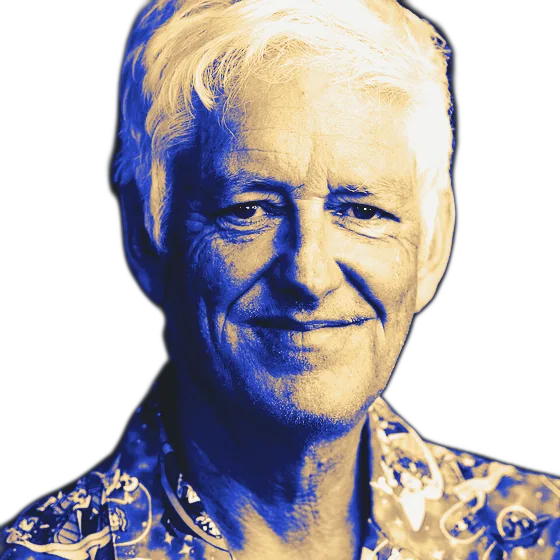
Back to everyone

People who build AI

Peter Norvig

former Google research director and AI textbook co-author

3 records

Portrait source: Christopher Michel, CC BY-SA 4.0

Records

There is a possibility that we will soon see a widespread increase in the capabilities of autonomous systems, and thus more displacement of people. This could lead to a societal problem of increased unemployment and income inequality. To me, this is the most serious concern about future AI systems.

Exact quote, beginning

Peter Norvig

former Google research director and AI textbook co-author

In a 2015 Edge essay, Peter Norvig called possible unemployment and income inequality from expanding autonomous systems his most serious concern about future AI.

Director of Research, Google Inc.; Fellow of the AAAI and the ACM; co-author, Artificial Intelligence: A Modern ApproachPublished 2015 · date of remarks not established2015 Edge Question: What Do You Think About Machines That Think?

Context and checks

Surrounding words

The automated system leads to some errors, but is a tradeoff that we have decided is worthwhile. We will continue to make tradeoffs in where we deploy autonomous systems. There is a possibility that we will soon see a widespread increase in the capabilities of autonomous systems, and thus more displacement of people. This could lead to a societal problem of increased unemployment and income inequality. To me, this is the most serious concern about future AI systems. In past technological revolutions (agricultural and industrial) the notion of work changed, but the changes happened over generations, not years, and the changes always led to new jobs. We may be in for a period of change that is much more rapid and disruptive; we will need some social conventions and safety nets to restore stability. The third concern is the universality of intelligent machines. In 1965 I. J.

What this quote does not say

  • The passage addresses labor and distributional disruption, not extinction or loss of control.
  • The collection provides only a year-level publication date.

How this was checked

  • Quote matched character-for-character against the captured page.

Reviewed by

an AI reviewer that read the whole source · an automatic character-by-character check

Statements they signed

FROM THE SIGNED STATEMENT

Mitigating the risk of extinction from AI should be a global priority alongside other societal-scale risks such as pandemics and nuclear war.

Signed statement:Statement on AI Extinction Risk” (CAIS)

Peter Norvig

former Google research director and AI textbook co-author

Signed as part of a group statement. Not spoken.

Peter Norvig signed the Statement on AI Extinction Risk, which says reducing extinction risk from AI should be a global priority alongside pandemics and nuclear war.

Education Fellow, Stanford UniversityDate not establishedStatement on AI Extinction Risk

Context and checks

Surrounding words

University Other Notable Figures Pattie Maes Professor, Massachusetts Institute of Technology - Media Lab AI Scientists Kevin Scott CTO, Microsoft Other Notable Figures Eric Horvitz Chief Scientific Officer, Microsoft AI Scientists Peter Norvig Education Fellow, Stanford University AI Scientists Joseph Sifakis Turing Award 2007, Professor, CNRS - Universite Grenoble - Alpes Other Notable Figures Atoosa Kasirzadeh Assistant Professor, University of Edinburgh, Alan Turing

What this quote does not say

  • Roster observed 2026-08-19; signing date unknown.

How this was checked

  • The organiser's own roster lists this person as a signer.

Reviewed by

an AI reviewer that read the whole source

FROM THE SIGNED STATEMENT

We recommend expanded research aimed at ensuring that increasingly capable AI systems are robust and beneficial: our AI systems must do what we want them to do.

Signed statement:Research Priorities for Robust and Beneficial AI” (FLI)

Peter Norvig

former Google research director and AI textbook co-author

Signed as part of a group statement. Not spoken.

Peter Norvig signed Research Priorities for Robust and Beneficial AI, which calls for research to ensure increasingly capable AI systems are robust and beneficial.

Director of research at Google and co-author of the standard textbook Artificial Intelligence: a Modern ApproachDate not establishedResearch Priorities for Robust and Beneficial AI

Context and checks

Surrounding words

George, co-founder of Vicarious Scott Phoenix, co-founder of Vicarious Yann LeCun, head of Facebook’s Artificial Intelligence Laboratory Geoffrey Hinton, University of Toronto and Google Inc. Yoshua Bengio, Université de Montréal Peter Norvig, Director of research at Google and co-author of the standard textbook Artificial Intelligence: a Modern Approach Oren Etzioni, CEO of Allen Inst.

What this quote does not say

  • Roster observed 2026-08-19; signing date unknown.

How this was checked

  • The organiser's own roster lists this person as a signer.

Reviewed by

an AI reviewer that read the whole source