Back to everyone

Faith leaders

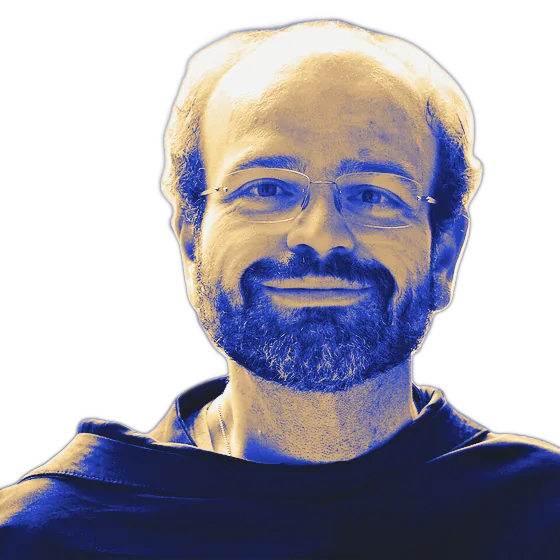
Paolo Benanti

Franciscan friar and professor of ethics at the Pontifical Gregorian University

3 records

Portrait source: Paolo Pegoraro, CC BY-SA 4.0

Records

I come from an engineering background and I know very well that a Turing machine can only solve certain problems. And proof of consciousness is not such a problem. We have systems that may fool us into believing they are conscious, but not more. This makes it a hypothetical problem for now, while it is much more urgent and important to discuss the effects that these AI systems can have on human labor, equality and access to resources such as energy or water.

Paolo Benanti

Franciscan friar and professor of ethics at the Pontifical Gregorian University

In an interview published in 2025, Paolo Benanti said proving machine consciousness is not a problem a Turing machine can solve and that AI's effects on labor, equality, energy, and water were more urgent to discuss.

Professor of ethics at the Pontifical Gregorian University; AI adviser to the Italian government; Vatican consultantPublished February 17, 2025 · date of remarks not establishedOriginal interview by Steffan Heuer

Context and checks

Surrounding words

Religions work with long time horizons. There's a debate as to whether those systems can become, or might have already become, sentient or conscious. Are some AI experts just delusional? I come from an engineering background and I know very well that a Turing machine can only solve certain problems. And proof of consciousness is not such a problem. We have systems that may fool us into believing they are conscious, but not more. This makes it a hypothetical problem for now, while it is much more urgent and important to discuss the effects that these AI systems can have on human labor, equality and access to resources such as energy or water. Let's assume we reach some form of super AI in the near future. What role will religions play when there are sentient beings other than humans among us? If someone is interacting with a machine like an oracle, that is a religious approach.

What this quote does not say

  • The qualification concerns sentience or consciousness, not every form of existential or loss-of-control risk.
  • The interview event date is not separately identified from publication.

How this was checked

  • Quote matched character-for-character against the captured page.

Reviewed by

an AI reviewer that read the whole source · an automatic character-by-character check

Ciò non toglie che dare dei fini alla macchina senza pensarci troppo, senza farci le giuste domande, può portare a degli esiti catastrofici, pur senza la presenza di una macchina cosciente.

Paolo Benanti

Franciscan friar and professor of ethics at the Pontifical Gregorian University

In an interview published in 2023, Paolo Benanti said giving goals to machines without thinking enough or asking the right questions could lead to catastrophic outcomes even without conscious machines.

Franciscan theologian and philosopher; member of the UN expert committee on artificial intelligencePublished December 12, 2023 · date of remarks not establishedInterview with Vatican media

Context and checks

Surrounding words

Quindi questa parte, il nuovo manico dell’Intelligenza Artificiale, cioè la scelta dei fini adeguati, deve e può essere solo in mano all’uomo. Ciò non toglie che dare dei fini alla macchina senza pensarci troppo, senza farci le giuste domande, può portare a degli esiti catastrofici, pur senza la presenza di una macchina cosciente. ChatGpt, lo strumento più popolare di intelligenza artificiale, ha compiuto un anno in questi giorni. Per alcuni è poco più di un giocattolo, per altri invece ci dà già l’idea dei cambiamenti che può portare alla nostra vita.

What this quote does not say

  • The word 'catastrophic' is not quantified and the passage does not claim extinction.
  • The interview date is not separately identified from the publication date.

How this was checked

  • Quote matched character-for-character against the captured page.

Reviewed by

an AI reviewer that read the whole source · an automatic character-by-character check

Statements they signed

FROM THE SIGNED STATEMENT

AI systems must never be allowed to make life or death decisions, especially in military applications during armed conflict or peacetime, law enforcement, border control, healthcare or judicial decisions.

Signed statement:Global Appeal for Peaceful Human Coexistence” (Rome working group)

Paolo Benanti

Franciscan friar and professor of ethics at the Pontifical Gregorian University

Signed as part of a group statement. Not spoken.

Paolo Benanti was listed as a member of the group that drafted the Global Appeal for Peaceful Human Coexistence, which calls for AI to remain under human control and serve humanity.

(Scientific Coordinator)September 12, 2025Global Appeal for Peaceful Human Coexistence

Context and checks

Surrounding words

Collectively, we reiterate the essential principle that machines are to serve the interests of humanity. Members of the working group that drafted the Global Appeal 1. Paolo Benanti (Scientific Coordinator) 2. Yoshua Bengio 3. Ernesto Belisario 4. Abeba Birhane 5. Cornelius Boersch 6. Yuval Noah Harari 7. Geoffrey Hinton 8. Lorena Jaume-Palasí 9. Antal Kuthy 10. Riccardo Luna (Coordinator) 11. Nnenna Nwakanma 12.

What this quote does not say

  • The page lists Paolo Benanti among the members who drafted the appeal, not in the separate 'Also signed by' list; the display claim preserves that distinction.

How this was checked

  • The organiser's own roster lists this person as a signer.

Reviewed by

an AI reviewer that read the whole source