Back to everyone

People who build AI

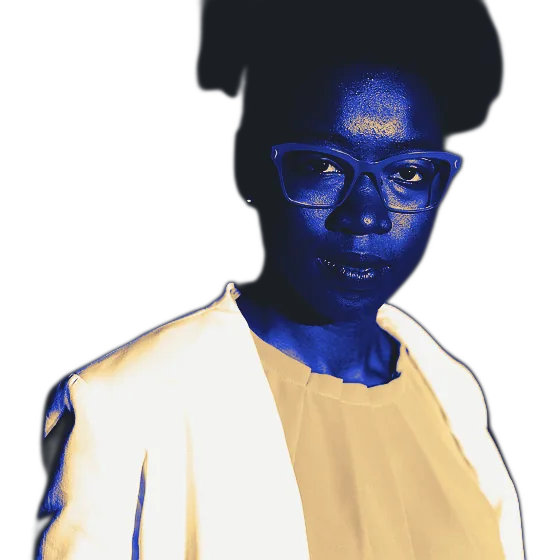
Joy Buolamwini

Founder of the Algorithmic Justice League

4 records

Portrait source: Niccolò Caranti, CC BY-SA 4.0

Records

Research continues to remind us that sexism, racism, ableism, and other intersecting forms of discrimination can be amplified by AI. Harms can arise unintended. The interest in self-driving cars is in part motivated by the promise they will reduce the more than 35,000 annual vehicle fatalities. A June 2019 study showed that for the task of pedestrian tracking, children were less likely to be detected than adults.

Exact quote, beginning

Joy Buolamwini

Founder of the Algorithmic Justice League

Testifying at a June 26, 2019 House Science Committee hearing, Joy Buolamwini said that sexism, racism, ableism “and other intersecting forms of discrimination can be amplified by AI”, citing a study in which pedestrian-tracking systems detected children less often than adults.

Founder, Algorithmic Justice League; graduate researcher at MITJune 26, 2019U.S. House Committee on Science, Space, and Technology hearing, Artificial Intelligence: Societal and Ethical Implications

Context and checks

Surrounding words

This research exposes limitations of AI systems that are infiltrating our lives, determining who gets hired or fired, and even who's targeted by the police. Research continues to remind us that sexism, racism, ableism, and other intersecting forms of discrimination can be amplified by AI. Harms can arise unintended. The interest in self-driving cars is in part motivated by the promise they will reduce the more than 35,000 annual vehicle fatalities. A June 2019 study showed that for the task of pedestrian tracking, children were less likely to be detected than adults. This finding motivates concerns that children could be at higher risk for being hit by self-driving cars. When AI-enabled technologies are presented as lifesavers, we must ask which lives will matter. In healthcare, researchers are exploring how to apply AI-enabled facial analysis systems to detect pain and monitor disease.

What this quote does not say

  • The physical-safety proposition is framed as a concern motivated by a pedestrian-tracking study, not an observed self-driving-car injury rate.
  • The passage concerns deployed-system harms rather than extinction-scale risk.

How this was checked

  • Quote located in the captured page; spacing normalised for display.

Reviewed by

an AI reviewer that read the whole source · an automatic character-by-character check

The “x-risk” I am concerned about, which I talk about in the book, is the x-risk of being excoded—that is, being harmed by AI systems. I am concerned with lethal autonomous weapons and giving AI systems the ability to make kill decisions. I am concerned with the ways in which AI systems can be used to kill people slowly through lack of access to adequate health care, housing, and economic opportunity.

Joy Buolamwini

Founder of the Algorithmic Justice League

Asked whether she still saw “room for strategic cooperation” with people worried about existential risk, Joy Buolamwini told IEEE Spectrum that the “x-risk” she is concerned about is “the x-risk of being excoded—that is, being harmed by AI systems”, naming lethal autonomous weapons and AI used to “kill people slowly” through lack of access to health care, housing and economic opportunity.

Founder, Algorithmic Justice LeaguePublished November 27, 2023 · date of remarks not establishedWhy AI Should Move Slow and Fix Things, email Q&A

Context and checks

Surrounding words

Do you still feel that way? What might that strategic cooperation look like? Buolamwini: The “x-risk” I am concerned about, which I talk about in the book, is the x-risk of being excoded—that is, being harmed by AI systems. I am concerned with lethal autonomous weapons and giving AI systems the ability to make kill decisions. I am concerned with the ways in which AI systems can be used to kill people slowly through lack of access to adequate health care, housing, and economic opportunity. I do not think you make change in the world by only talking to people who agree with you.

What this quote does not say

  • The interviewer characterizes her as dismissive of species-level existential risk, but the selected answer does not itself state that such risk is impossible or assign it a probability.
  • This should be recorded as a narrower framing, not as a retraction of the direct-risk or moratorium statements.

How this was checked

  • Quote matched character-for-character against the captured page.

Reviewed by

an AI reviewer that read the whole source · an automatic character-by-character check

Computer vision experts, the ACLU, and the Algorithmic Justice League, which I founded in 2016, have all uncovered racial bias in facial analysis and recognition technology. Given what we know now, as well as the history of racist police brutality, there needs to be a moratorium on using such technology in law enforcement—including in equipping drones or police body cameras with facial analysis or recognition software for lethal operations.

Joy Buolamwini

Founder of the Algorithmic Justice League

In a February 2019 TIME essay, Joy Buolamwini wrote that “there needs to be a moratorium” on law-enforcement use of facial analysis and recognition technology, including equipping drones or police body cameras with it for lethal operations.

Founder, Algorithmic Justice LeaguePublished February 7, 2019 · date of remarks not establishedTIME Ideas, 2019 Optimists issue

Context and checks

Surrounding words

Though these research findings can be discouraging, at least we’re paying attention now. This gives us the opportunity to highlight issues early and prevent pervasive damage down the line. Computer vision experts, the ACLU, and the Algorithmic Justice League, which I founded in 2016, have all uncovered racial bias in facial analysis and recognition technology. Given what we know now, as well as the history of racist police brutality, there needs to be a moratorium on using such technology in law enforcement—including in equipping drones or police body cameras with facial analysis or recognition software for lethal operations. We can organize to protest this technology being used dangerously. When people’s lives, livelihoods, and dignity are on the line, AI must be developed and deployed with care and oversight.

What this quote does not say

  • The passage does not specify the moratorium's duration, exceptions, jurisdiction, or statutory vehicle.
  • The reference to drones and body cameras concerns facial analysis or recognition software used for lethal operations; it is not a blanket statement about every autonomous weapon.

How this was checked

  • Quote matched character-for-character against the captured page.

Reviewed by

an AI reviewer that read the whole source · an automatic character-by-character check

Statements they signed

FROM THE SIGNED STATEMENT

When it comes to AI safety and security, openness is an antidote, not a poison.

Signed statement:Joint Statement on AI Safety and Openness” (Mozilla)

Joy Buolamwini

Founder of the Algorithmic Justice League

Signed as part of a group statement. Not spoken.

Joy Buolamwini was listed as a signer of the “Joint Statement on AI Safety and Openness,” which said open, responsible, and transparent approaches are critical to AI safety and security.

Date not establishedJoint Statement on AI Safety and Openness

Context and checks

Surrounding words

Bruno Sportisse, INRIA - Anne Bouverot, Ecole Normale Supérieure - Alexandra Reeve Givens, CDT - Cedric O, MistralAI - Andrew Ng, AI Fund - Yann Lecun, Meta - Jean-Noël Barrot, Minister for Digital Affairs, France - Amba Kak, AI Now - Joy Buolamwini, Algorithmic Justice League - Julien Chaumond, Hugging Face - Brian Behlendorf, Linux Foundation - Eric Von Hippel, MIT Sloan School of Business - Moez Draief, Mozilla.ai - Pelonomi Moiloa, LelapaAI - Philippe Beaudoin, Waverly - Raffi

How this was checked

  • The organiser's own roster lists this person as a signer.

Reviewed by

an AI reviewer that read the whole source