Back to everyone

Politicians and public officials

Jon Husted

U.S. senator from Ohio

3 records

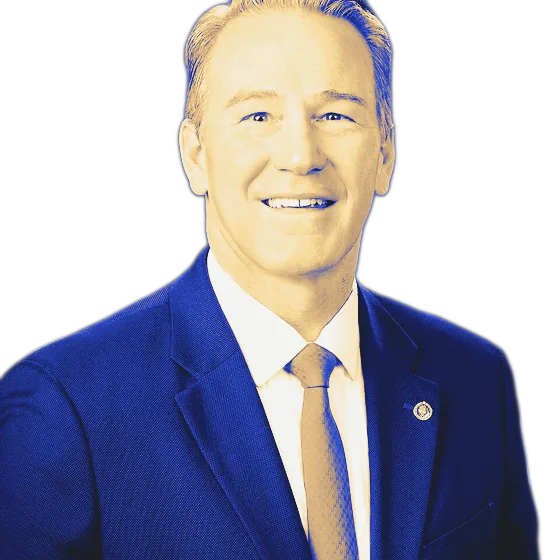
Portrait source: United States Senate, Public domain

Records

Inventions can be used both for good and bad, and we need to ensure we are protecting our kids from dangerous misuse of AI by people who would do them harm. Bad actors are using things like chatbots impersonating minors to engage in sexually explicit interactions. Children will not be safe as long as these tools exist, which is why I am co-leading the effort to establish strong penalties for anyone who creates or operates these destructive chatbots

Jon Husted

U.S. senator from Ohio

From a written statement his office issued. Not spoken.

Introducing the bipartisan SIMS Act in June 2026, Jon Husted said bad actors are using chatbots impersonating minors to engage in sexually explicit interactions, that children will not be safe as long as those tools exist, and that he is co-leading an effort to establish strong penalties for anyone who creates or operates them.

U.S. Senator from OhioJune 10, 2026Official Senate press release and attached bill text

Context and checks

Surrounding words

Currently, there are villains using chatbots programmed to emulate minors to have sexually explicit conversations. The SIMS Act would make it criminal for someone to design a chatbot capable of emulating a child engaging in sexual acts. “Inventions can be used both for good and bad, and we need to ensure we are protecting our kids from dangerous misuse of AI by people who would do them harm. Bad actors are using things like chatbots impersonating minors to engage in sexually explicit interactions. Children will not be safe as long as these tools exist, which is why I am co-leading the effort to establish strong penalties for anyone who creates or operates these destructive chatbots,” said Husted. “AI has the potential to do incredible good and incredible bad. It’s up to Congress to put up strong guardrails to stop the bad and encourage the good.

What this quote does not say

  • The target class is narrow -- chatbots designed to simulate a child in sexually explicit conversation or conduct -- and must not be described as a general chatbot ban.
  • Office-issued written statement in a press release, not spoken remarks. Husted is one of four introducing senators; the Coons, Cassidy and Murphy quotes on the same page are separately attributed and are not his.

How this was checked

  • Quote matched character-for-character against the captured page.

Reviewed by

an AI reviewer that read the whole source · an automatic character-by-character check

We need to protect children in the digital world the same way we do in the physical world. As AI becomes more advanced and more accessible, we have a responsibility to make sure these tools are not exposing children to dangerous, manipulative or inappropriate interactions. The CHAT Act 2.0 would put guardrails in place to keep parents informed, protect children from harm and ensure their safety comes before unchecked technology

Jon Husted

U.S. senator from Ohio

Introducing the bipartisan CHAT Act 2.0 with Sen. Andy Kim in July 2026, Jon Husted said that as AI becomes more advanced and more accessible there is a responsibility to make sure these tools are not exposing children to dangerous, manipulative or inappropriate interactions.

U.S. Senator from OhioJuly 29, 2026Official Senate press release

Context and checks

Surrounding words

chatbots from engaging in harmful behaviors with minors, including encouraging self-harm, generating sexual content, impersonating humans or licensed professionals and engaging in emotionally manipulative or romantic interactions. “We need to protect children in the digital world the same way we do in the physical world. As AI becomes more advanced and more accessible, we have a responsibility to make sure these tools are not exposing children to dangerous, manipulative or inappropriate interactions. The CHAT Act 2.0 would put guardrails in place to keep parents informed, protect children from harm and ensure their safety comes before unchecked technology,” said Husted. “We all just want peace of mind that our kids will be okay growing up in this era of algorithms and AI.

What this quote does not say

  • Office-issued written statement in a press release, not a recording or verbatim transcript.
  • The risk claim is limited to child-facing AI companion chatbots and must not be generalized to advanced-AI loss of control.

How this was checked

  • Quote matched character-for-character against the captured page.

Reviewed by

an AI reviewer that read the whole source · an automatic character-by-character check

If America wants to lead the world in AI and strengthen our national security, we have to build the energy infrastructure to support it. But we must do that without passing the costs on to working families and small businesses. The Ratepayer Protection Act would keep America globally competitive while protecting Ohioans and Americans from higher electricity bills

Jon Husted

U.S. senator from Ohio

Introducing the Ratepayer Protection Act in July 2026, Jon Husted said that if America wants to lead the world in AI and strengthen national security it has to build the energy infrastructure to support it, but must do so without passing the costs on to working families and small businesses.

U.S. Senator from OhioJuly 20, 2026Official Senate press release and attached bill text

Context and checks

Surrounding words

WASHINGTON – Sen. Jon Husted (R-Ohio) introduced the Ratepayer Protection Act to ensure American families and small businesses aren’t left paying for the energy infrastructure needed to support new data centers. “If America wants to lead the world in AI and strengthen our national security, we have to build the energy infrastructure to support it. But we must do that without passing the costs on to working families and small businesses. The Ratepayer Protection Act would keep America globally competitive while protecting Ohioans and Americans from higher electricity bills,” said Husted. The Ratepayer Protection Act would require states to consider establishing standards for states and Public Utility Commissions when connecting large electricity users—such as data centers—to the grid.

What this quote does not say

  • The attached bill regulates all qualifying large-load electricity customers with demand of 100 megawatts or more, not only AI companies.
  • This is a cost-allocation position, not a safety or capability claim: Husted affirmatively wants the AI infrastructure built, and the release notes he joined President Trump at a March 2026 White House roundtable on the Ratepayer Protection Pledge.

How this was checked

  • Quote matched character-for-character against the captured page.

Reviewed by

an AI reviewer that read the whole source · an automatic character-by-character check