Back to everyone

Military and national security

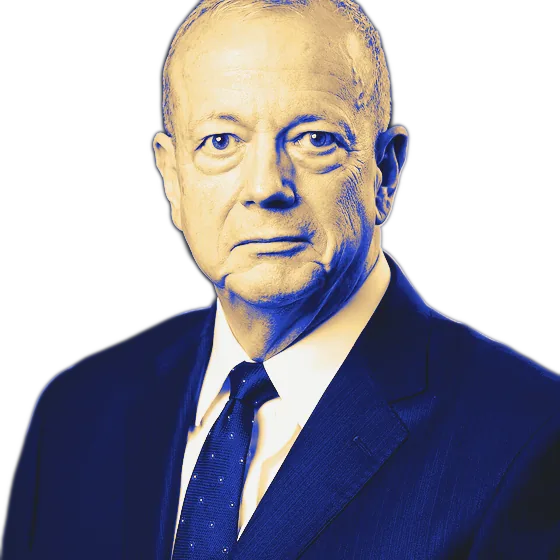
John R. Allen

Retired four-star Marine general; former commander of U.S. and NATO forces in Afghanistan.

2 records

Portrait source: Benjamin Applebaum, Public domain

Records

For example, we don't want a system of drones, or a swarm of drones, making autonomous, unilateral decisions on taking life or destroying critical infrastructure.

John R. Allen

Retired four-star Marine general; former commander of U.S. and NATO forces in Afghanistan.

In a podcast published in 2024, John R. Allen said drone systems should not autonomously decide to kill people or destroy critical infrastructure.

Retired U.S. Marine Corps four-star generalPublished October 15, 2024 · date of remarks not establishedLeadership and Legacy: Conversations at the George Washington Presidential Library

Context and checks

Surrounding words

is about the human role in all of this, and the more pervasive and the faster the character of war moves, the greater the challenge that the human dimension faces in intervening in this process in a way that is consistent with our values. For example, we don't want a system of drones, or a swarm of drones, making autonomous, unilateral decisions on taking life or destroying critical infrastructure. So for us, having a human in the loop, where once that drone, based on intelligence that we have fed it, has gone through the process of target identification and target acquisition, before that drone, as we say, pickles off the Hellfire

What this quote does not say

  • The page was published on October 15, 2024 and says the series's first six conversations took place from August 2023 through March 2024, but it does not state this interview's date.
  • Allen immediately advocated a human-in-the-loop approval before a drone fires, while acknowledging that this could make U.S. forces slower than adversaries.

How this was checked

  • Quote matched character-for-character against the captured page.

Reviewed by

an AI reviewer that read the whole source · an automatic character-by-character check

I'm not afraid of the technology. I've seen it applied. I've seen it where it can be used for good. And I have great confidence that with the right kinds of constructive leadership in principle based societies, that we can use this generally for the good. And I, so I'm optimistic, frankly.

John R. Allen

Retired four-star Marine general; former commander of U.S. and NATO forces in Afghanistan.

In a podcast published in 2024, John R. Allen said he was not afraid of AI and was optimistic it could generally be used for good with the right leadership.

Retired U.S. Marine Corps four-star generalPublished October 15, 2024 · date of remarks not establishedLeadership and Legacy: Conversations at the George Washington Presidential Library

Context and checks

Surrounding words

Now, we might not be able to do a thing about that, but we can certainly keep that from accidentally occurring in our own society through the right kinds of legislative and regulatory processes. I'm not afraid of the technology. I've seen it applied. I've seen it where it can be used for good. And I have great confidence that with the right kinds of constructive leadership in principle based societies, that we can use this generally for the good. And I, so I'm optimistic, frankly. Patrick Spero: I was going to ask you if you could imagine the future of the military with AI assistance, how is that going to affect leadership? General Allen: Yeah, look, it's a really important issue.

What this quote does not say

  • The page was published on October 15, 2024 and says the series's first six conversations took place from August 2023 through March 2024, but it does not state this interview's date.
  • Allen's optimism was conditional on constructive leadership and regulation; later in the interview he said AI could accelerate warfare, opposed drones making autonomous decisions to kill or destroy critical infrastructure, and described a risk of hyperwar outpacing human decision-making.

How this was checked

  • Quote matched character-for-character against the captured page.

Reviewed by

an AI reviewer that read the whole source · an automatic character-by-character check