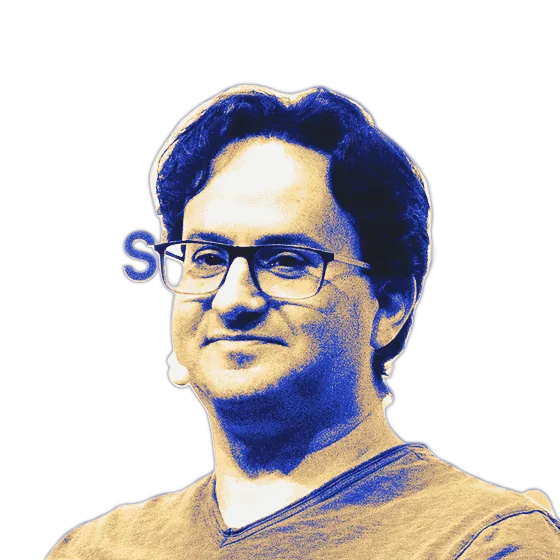
Our RSP focuses on managing catastrophic risks—those where an AI model has the potential to directly cause large-scale devastation. Such risks can come from deliberate misuse (e.g., use by terrorists or state actors to create bioweapons) or from models that cause destruction by acting autonomously in ways contrary to the intent of their designers.
Jared Kaplan
co-founder and chief science officer of Anthropic
In a written statement for a December 2023 Senate AI Insight Forum, Jared Kaplan wrote that Anthropic's Responsible Scaling Policy focuses on catastrophic risks -- those where an AI model has the potential to directly cause large-scale devastation -- and that such risks can come from deliberate misuse, such as terrorists or state actors using a model to create bioweapons, or from models that cause destruction by acting autonomously in ways contrary to the intent of their designers.
Co-Founder and Chief Science Officer, Anthropic PBCDecember 6, 2023AI Insight Forum: Risk, Alignment, & Guarding Against Doomsday Scenarios
Context and checks
Surrounding words
Policy In September, Anthropic published our Responsible Scaling Policy (RSP) 6 , a series of technical and organizational protocols that we are adopting to help us manage the risks of developing increasingly capable AI systems. Our RSP focuses on managing catastrophic risks—those where an AI model has the potential to directly cause large-scale devastation. Such risks can come from deliberate misuse (e.g., use by terrorists or state actors to create bioweapons) or from models that cause destruction by acting autonomously in ways contrary to the intent of their designers. Our RSP defines a framework called AI Safety Levels (ASL) for addressing catastrophic risks, modeled loosely after the U.S. government’s biosafety level (BSL) standards for handling of dangerous biological materials.
What this quote does not say
- This is prepared written material submitted for the forum, not a transcript proving oral delivery.
- REQUIRED QUALIFIER FROM THE SAME DOCUMENT: Kaplan states twice that 'we do not believe that the systems available today pose an imminent concern' (introduction and conclusion), framing the catastrophic risks as future and conditional -- 'it is prudent to do foundational work now to help reduce risks from advanced AI if and when much more powerful systems are developed'.
How this was checked
- Quote located in the captured page; spacing normalised for display.
Reviewed by
an AI reviewer that read the whole source · an automatic character-by-character check