Back to everyone

People who build AI

Geoffrey Hinton

Nobel laureate in physics; Turing Award winner; pioneer of deep learning

9 records

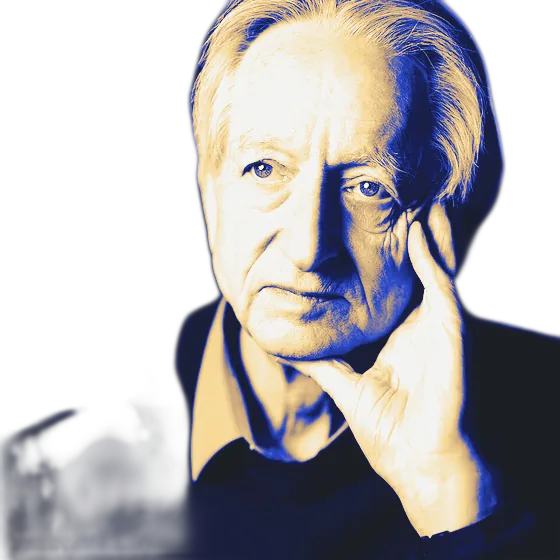
Portrait source: Cmichel67, CC BY-SA 4.0

Records

Well, because they might take over.

Geoffrey Hinton

Nobel laureate in physics; Turing Award winner; pioneer of deep learning

Asked why we can't afford to get AI wrong, Hinton said the systems "might take over" — from humanity — and called it "a possibility."

Professor emeritus, University of Toronto; had resigned from Google in May 2023October 8, 2023CBS 60 Minutes, interview with Scott Pelley

Context and checks

Surrounding words

And normally, the first time you deal with something totally novel, you get it wrong. And we can't afford to get it wrong with these things. Scott Pelley: Can't afford to get it wrong, why? Geoffrey Hinton: Well, because they might take over. Scott Pelley: Take over from humanity? Geoffrey Hinton: Yes. That's a possibility. Scott Pelley: Why would they want to? Geoffrey Hinton: I'm not saying it will happen. If we could stop them ever wanting to, that would be great.

How this was checked

  • Quote matched character-for-character against the captured page.
  • Wording confirmed against the recording.

Reviewed by

an AI reviewer that read the whole source · an automatic character-by-character check

The fact that digital intelligences are immortal and did not evolve should make them less susceptible to religion and wars, but if a digital super-intelligence ever wanted to take control it is unlikely that we could stop it, so the most urgent research question in AI is how to ensure that they never want to take control.

Geoffrey Hinton

Nobel laureate in physics; Turing Award winner; pioneer of deep learning

In an abstract he wrote for a lecture hosted by MIT's Program in Science, Technology, and Society, Hinton wrote that if a digital super-intelligence ever wanted to take control it is unlikely we could stop it, and that the most urgent research question in AI is how to ensure they never want to take control.

University of TorontoDate not establishedLecture abstract hosted by the MIT Program in Science, Technology, and Society

Context and checks

Surrounding words

This leads me to believe that large scale digital computation is probably far better at acquiring knowledge than biological computation and may soon be much more intelligent than us. The fact that digital intelligences are immortal and did not evolve should make them less susceptible to religion and wars, but if a digital super-intelligence ever wanted to take control it is unlikely that we could stop it, so the most urgent research question in AI is how to ensure that they never want to take control.

What this quote does not say

  • The statement concerns loss of control and does not itself state extinction.
  • This is an abstract Hinton wrote for a talk, not a transcript or recording of the talk itself.

How this was checked

  • Quote located in the captured page; spacing normalised for display.

Reviewed by

an AI reviewer that read the whole source · an automatic character-by-character check

Statements they signed

FROM THE SIGNED STATEMENT

Mitigating the risk of extinction from AI should be a global priority alongside other societal-scale risks such as pandemics and nuclear war.

Signed statement:Statement on AI Extinction Risk” (CAIS)

Geoffrey Hinton

Nobel laureate in physics; Turing Award winner; pioneer of deep learning

Signed as part of a group statement. Not spoken.

Geoffrey Hinton signed the 2023 'Statement on AI Extinction Risk,' which said reducing the risk of extinction from AI should be a global priority alongside pandemics and nuclear war.

Emeritus Professor of Computer Science, University of TorontoMay 30, 2023Statement on AI Extinction Risk

Context and checks

Surrounding words

Signatories: AI Scientists Other Notable Figures Thank you! Your submission has been received! Oops! Something went wrong while submitting the form. Geoffrey Hinton Emeritus Professor of Computer Science, University of Toronto AI Scientists Yoshua Bengio Professor of Computer Science, U.

What this quote does not say

  • The role is the roster's wording: 'Emeritus Professor of Computer Science, University of Toronto'.

How this was checked

  • The organiser's own roster lists this person as a signer.

Reviewed by

an AI reviewer that read the whole source

FROM THE SIGNED STATEMENT

Unsafe development, deployment, or use of AI systems may pose catastrophic or even existential risks to humanity within our lifetimes.

Signed statement:IDAIS Beijing Statement” (IDAIS)

Geoffrey Hinton

Nobel laureate in physics; Turing Award winner; pioneer of deep learning

Signed as part of a group statement. Not spoken.

Geoffrey Hinton signed the 2024 'IDAIS Beijing Statement,' which proposed international red lines for AI development to reduce catastrophic and existential risks from misuse and loss of control.

Professor Emeritus, Department of Computer ScienceMarch 11, 2024IDAIS Beijing Statement

Context and checks

Surrounding words

挑战。我们鼓励建立更强大的全球技术网络,通过访问研究人员项目和组织深入的人工智能安全会议和研讨会,加速人工智能安全的研发和合作。需要额外的资金来支持该领域的发展:我们呼吁人工智能开发商和政府资助者将至少三分之一的人工智能研发预算投入到安全领域。 结论 需要采取果断行动,以避免人工智能造成灾难性的全球后果。协调一致的技术研究工作与审慎的国际治理制度相结合可以减轻人工智能的大部分风险,从而带来许多潜在的好处。国际科学和政府在安全方面的合作必须继续并加强。 Signatories Geoffrey Hinton Professor Emeritus, Department of Computer Science University of Toronto Turing Award Winner Nobel Prize Winner Andrew Yao 姚期智 Turing Award Winner Dean Shanghai Qi Zhi Institute Dean, Institute for Interdisciplinary Information Sciences

What this quote does not say

  • The role is the roster's wording: 'Professor Emeritus, Department of Computer Science'. The following roster lines identify 'University of Toronto', 'Turing Award Winner', and 'Nobel Prize Winner'.

How this was checked

  • The organiser's own roster lists this person as a signer.

Reviewed by

an AI reviewer that read the whole source

FROM THE SIGNED STATEMENT

These can be weapons of terror, weapons that despots and terrorists use against innocent populations, and weapons hacked to behave in undesirable ways.

Signed statement:2017 Open Letter to the UN CCW” (Toby Walsh/FLI)

Geoffrey Hinton

Nobel laureate in physics; Turing Award winner; pioneer of deep learning

Signed as part of a group statement. Not spoken.

Geoffrey Hinton signed the 2017 'Open Letter to the UN CCW,' which urged countries to prevent an arms race in lethal autonomous weapons, protect civilians from their misuse, and avoid their destabilizing effects.

founder of DNNResearch Inc, Canada.August 20, 20172017 Open Letter to the UN CCW

Context and checks

Surrounding words

Peter Turner, founder & MD of Tribotix, Australia. Yoshua Bengio, founder of Element AI & Montreal Institute for Learning Algorithms, Canada. Ryan Gariepy, founder & CTO, Clearpath Robotics, found & CTO of OTTO Motors, Canada. Geoffrey Hinton, founder of DNNResearch Inc, Canada. James Chow, founder & CEO of UBTECH Robotics, China. Robert Li, founder & CEO of Sankobot, China. Marek Rosa, founder & CEO of GoodAI, Czech Republic.

What this quote does not say

  • The role is the roster's wording: 'founder of DNNResearch Inc, Canada.'

How this was checked

  • The organiser's own roster lists this person as a signer.

Reviewed by

an AI reviewer that read the whole source

FROM THE SIGNED STATEMENT

AI systems must never be allowed to make life or death decisions, especially in military applications during armed conflict or peacetime, law enforcement, border control, healthcare or judicial decisions.

Signed statement:Global Appeal for Peaceful Human Coexistence” (Rome working group)

Geoffrey Hinton

Nobel laureate in physics; Turing Award winner; pioneer of deep learning

Signed as part of a group statement. Not spoken.

Geoffrey Hinton was listed as a member of the working group that drafted the 2025 'Global Appeal for Peaceful Human Coexistence,' which called for AI to remain under human control and for binding international red lines and oversight.

September 12, 2025Global Appeal for Peaceful Human Coexistence

Context and checks

Surrounding words

Members of the working group that drafted the Global Appeal 1. Paolo Benanti (Scientific Coordinator) 2. Yoshua Bengio 3. Ernesto Belisario 4. Abeba Birhane 5. Cornelius Boersch 6. Yuval Noah Harari 7. Geoffrey Hinton 8. Lorena Jaume-Palasí 9. Antal Kuthy 10. Riccardo Luna (Coordinator) 11. Nnenna Nwakanma 12. Valerie Pisano 13. Stuart Russell 14. Max Tegmark 15. Marco Trombetti 16. Jimena Sofía Viveros Álvarez 17. Alexander Waibel 18.

How this was checked

  • The organiser's own roster lists this person as a signer.

Reviewed by

an AI reviewer that read the whole source

FROM THE SIGNED STATEMENT

These systems have also begun to display self-preserving behaviours, such as attempting to blackmail developers to avoid being replaced with a new version.

Signed statement:IDAIS Shanghai Statement” (IDAIS)

Geoffrey Hinton

Nobel laureate in physics; Turing Award winner; pioneer of deep learning

Signed as part of a group statement. Not spoken.

Geoffrey Hinton signed the 2025 'IDAIS Shanghai Statement,' which called for safety requirements for frontier AI developers, globally agreed behavioral red lines, and research on AI systems that are safe by design.

Professor Emeritus, Department of Computer ScienceJuly 25, 2025IDAIS Shanghai Statement

Context and checks

Surrounding words

制,以设计安全的人工智能系统。从短期来看,亟需建立可扩展的监管技术以应对人工智能的欺骗问题。具体而言,可利用辅助性人工智能模型作为“测谎仪”,协助相关人员对模型的输出结果进行评估与确证。其他短期可行举措亦包括:加强信息安全投入,以防范来自内部(包括人类或人工智能)和外部的安全威胁;以及采用严谨的鲁棒性技术,提升模型对“越狱”等攻击手段的抵御能力。从长远来看,我们必须从当前在安全问题出现后才被动应对的模式,转向构建“基于设计的安全”(内生安全)的架构。 Signatories Geoffrey Hinton Professor Emeritus, Department of Computer Science University of Toronto Turing Award Winner Nobel Prize Winner Andrew Yao 姚期智 Turing Award Winner Dean Shanghai Qi Zhi Institute Dean, Institute for Interdisciplinary Information Sciences

What this quote does not say

  • The role is the roster's wording: 'Professor Emeritus, Department of Computer Science'. The following roster lines identify 'University of Toronto', 'Turing Award Winner', and 'Nobel Prize Winner'.

How this was checked

  • The organiser's own roster lists this person as a signer.

Reviewed by

an AI reviewer that read the whole source

FROM THE SIGNED STATEMENT

Loss of human control or malicious use of these AI systems could lead to catastrophic outcomes for all of humanity.

Signed statement:IDAIS Venice Statement” (IDAIS)

Geoffrey Hinton

Nobel laureate in physics; Turing Award winner; pioneer of deep learning

Signed as part of a group statement. Not spoken.

Geoffrey Hinton signed the 2024 'IDAIS Venice Statement,' which called for treating AI safety as a global public good and building international systems for emergency preparedness, safety assurance, and independent verification.

Professor Emeritus, Department of Computer ScienceSeptember 8, 2024IDAIS Venice Statement

Context and checks

Surrounding words

Scientific Report on the Safety of Advanced AI Turing Award Winner Andrew Yao 姚期智 Turing Award Winner Dean Shanghai Qi Zhi Institute Dean, Institute for Interdisciplinary Information Sciences and College of AI Tsinghua University Geoffrey Hinton Professor Emeritus, Department of Computer Science University of Toronto Turing Award Winner Nobel Prize Winner Stuart Russell Professor and Smith-Zadeh Chair in Engineering University of California, Berkeley Founder of Center for

What this quote does not say

  • The role is the roster's wording: 'Professor Emeritus, Department of Computer Science'. The following roster lines identify 'University of Toronto', 'Turing Award Winner', and 'Nobel Prize Winner'.

How this was checked

  • The organiser's own roster lists this person as a signer.

Reviewed by

an AI reviewer that read the whole source

FROM THE SIGNED STATEMENT

We recommend expanded research aimed at ensuring that increasingly capable AI systems are robust and beneficial: our AI systems must do what we want them to do.

Signed statement:Research Priorities for Robust and Beneficial AI” (FLI)

Geoffrey Hinton

Nobel laureate in physics; Turing Award winner; pioneer of deep learning

Signed as part of a group statement. Not spoken.

Geoffrey Hinton signed the 2015 statement 'Research Priorities for Robust and Beneficial AI,' which called for expanded research to ensure increasingly capable AI systems are robust, beneficial, and do what people want them to do.

University of Toronto and Google Inc.January 11, 2015Research Priorities for Robust and Beneficial AI

Context and checks

Surrounding words

of DeepMind Shane Legg, co-founder of DeepMind Mustafa Suleyman, co-founder of DeepMind Dileep George, co-founder of Vicarious Scott Phoenix, co-founder of Vicarious Yann LeCun, head of Facebook’s Artificial Intelligence Laboratory Geoffrey Hinton, University of Toronto and Google Inc. Yoshua Bengio, Université de Montréal Peter Norvig, Director of research at Google and co-author of the standard textbook Artificial Intelligence: a Modern Approach Oren Etzioni, CEO of Allen Inst.

What this quote does not say

  • The role is the roster's wording: 'University of Toronto and Google Inc.'

How this was checked

  • The organiser's own roster lists this person as a signer.

Reviewed by

an AI reviewer that read the whole source