Back to everyone

Leaders of other countries

Fu Ying

Chairperson of Tsinghua's Center for International Security and Strategy; former Chinese vice foreign minister

6 records

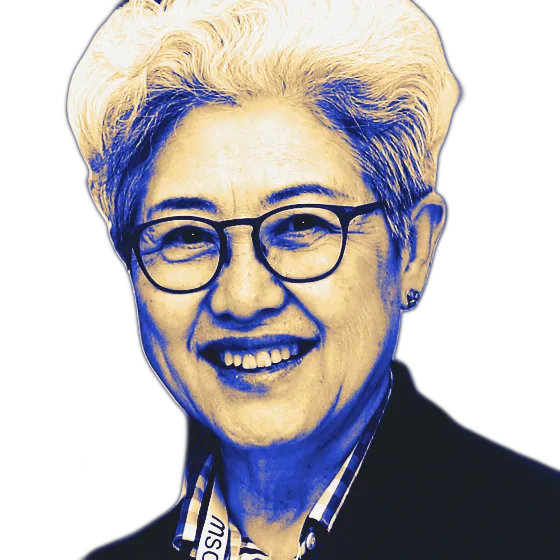
Portrait source: U.S. Department of State from United States, Public domain

Records

The military application of AI is an integrated human-machine-environment collaborative process, and the machine’s deficiencies in interpretability, learning and common sense will magnify the risks of battlefield conflicts and even lead to escalations of international crises.

Fu Ying

Chairperson of Tsinghua's Center for International Security and Strategy; former Chinese vice foreign minister

In a December 2020 Noema essay, Fu Ying wrote that a machine's deficiencies in interpretability, learning and common sense will magnify the risks of battlefield conflicts and even lead to escalations of international crises.

Chairperson, Center for International Security and Strategy at Tsinghua University; former Vice Minister of Foreign Affairs of ChinaPublished December 17, 2020 · date of remarks not establishedTogether, The U.S. And China Can Reduce The Risks From AI

Context and checks

Surrounding words

various approaches to AI — like behaviorist reinforcement learning, connectionist deep learning and symbolic expert systems — cannot accurately reflect human cognitive capabilities, such as intuition, emotion, responsibility and value. The military application of AI is an integrated human-machine-environment collaborative process, and the machine’s deficiencies in interpretability, learning and common sense will magnify the risks of battlefield conflicts and even lead to escalations of international crises. Pathways To AI Security Governance Both sides of the discussions agreed that countries need to exercise restraint in the military field to prevent humankind from suffering catastrophic damages from the weaponization of AI technology.

What this quote does not say

  • The statement concerns weaponized AI and conflict escalation, not a general probability of human extinction or AGI loss of control.
  • Later in the same essay Fu writes that "China is ready to work with the U.S. and the rest of the world on the governance of AI" — consistent with, and not a qualification of, this passage.

How this was checked

  • Quote matched character-for-character against the captured page.

Reviewed by

an AI reviewer that read the whole source · an automatic character-by-character check

It may be more viable to require the development of AI-enabled weapons to align with existing norms in international laws. Countries ought to work together on risk prevention for AI-enabled weapons, with the aim of finding consensus and building governance mechanisms together.

Fu Ying

Chairperson of Tsinghua's Center for International Security and Strategy; former Chinese vice foreign minister

In a December 2020 Noema essay, Fu Ying wrote that it may be more viable to require AI-enabled weapons to align with existing norms in international law than to reach a total ban, and that countries ought to work together on risk prevention and build governance mechanisms together.

Chairperson, Center for International Security and Strategy at Tsinghua University; former Vice Minister of Foreign Affairs of ChinaPublished December 17, 2020 · date of remarks not establishedTogether, The U.S. And China Can Reduce The Risks From AI

Context and checks

Surrounding words

Judging from the current rate of AI development, militarization is all but inevitable. It may be more viable to require the development of AI-enabled weapons to align with existing norms in international laws. Countries ought to work together on risk prevention for AI-enabled weapons, with the aim of finding consensus and building governance mechanisms together. During track-two discussions with our colleagues from the U.S., we focused on how to define the boundaries of “off-limits areas” for AI-enabled weapons, how to regulate such weapons in accordance with international laws and norms, and how

What this quote does not say

  • "It may be more viable" is a qualified comparative policy judgment, not an unconditional legal prescription.
  • The passage does not reject a ban on moral grounds; the preceding sentences say a global consensus on a total ban "will be hard to reach" and that negotiations "will be protracted", and that militarization is "all but inevitable".

How this was checked

  • Quote matched character-for-character against the captured page.

Reviewed by

an AI reviewer that read the whole source · an automatic character-by-character check

Statements they signed

FROM THE SIGNED STATEMENT

Unsafe development, deployment, or use of AI systems may pose catastrophic or even existential risks to humanity within our lifetimes.

Signed statement:IDAIS Beijing Statement” (IDAIS)

Fu Ying

Chairperson of Tsinghua's Center for International Security and Strategy; former Chinese vice foreign minister

Signed as part of a group statement. Not spoken.

Fu Ying was listed as a signatory of the “IDAIS Beijing Statement,” which proposed international red lines to keep AI systems from copying or improving themselves without human approval, seeking power, aiding weapons development, conducting serious cyberattacks, or deceiving overseers.

Date not establishedIDAIS Beijing Statement

Context and checks

Surrounding words

Scientific Report on the Safety of Advanced AI Turing Award Winner Ya-Qin Zhang 张亚勤 Chair Professor of AI Science Tsinghua University Dean of Institute for AI Industry Research (AIR) Tsinghua University Former President Baidu Fu Ying 傅莹 Stuart Russell Professor and Smith-Zadeh Chair in Engineering University of California, Berkeley Founder of Center for Human-Compatible Artificial Intelligence (CHAI) University of California, Berkeley Xue Lan 薛澜 Dean, Schwarzman

How this was checked

  • The organiser's own roster lists this person as a signer.

Reviewed by

an AI reviewer that read the whole source

FROM THE SIGNED STATEMENT

In the near future, AI may put high-consequence biological capabilities—potentially including the design of pathogens more dangerous than anything found in nature—within reach of actors who cannot access them today.

Signed statement:IDAIS London Statement” (IDAIS)

Fu Ying

Chairperson of Tsinghua's Center for International Security and Strategy; former Chinese vice foreign minister

Signed as part of a group statement. Not spoken.

Fu Ying was listed as a signatory of the “IDAIS London Statement,” which asked governments to recognize the shared threat from AI-enabled cyberattacks and biological misuse and commit to preventing them.

Date not establishedIDAIS London Statement

Context and checks

Surrounding words

Russell Professor and Smith-Zadeh Chair in Engineering University of California, Berkeley Founder of Center for Human-Compatible Artificial Intelligence (CHAI) University of California, Berkeley Craig Mundie President Mundie & Associates Fu Ying 傅莹 Xue Lan 薛澜 Dean, Schwarzman College Tsinghua University Director, Institute for AI International Governance (I-AIIG) Tsinghua University Max Tegmark Professor, Center for Brains, Minds and Machines (CBMM) Massachusetts Institute of

How this was checked

  • The organiser's own roster lists this person as a signer.

Reviewed by

an AI reviewer that read the whole source

FROM THE SIGNED STATEMENT

These systems have also begun to display self-preserving behaviours, such as attempting to blackmail developers to avoid being replaced with a new version.

Signed statement:IDAIS Shanghai Statement” (IDAIS)

Fu Ying

Chairperson of Tsinghua's Center for International Security and Strategy; former Chinese vice foreign minister

Signed as part of a group statement. Not spoken.

Fu Ying was listed as a signatory of the “IDAIS Shanghai Statement,” which called for safety assurances from AI developers, globally agreed behavioral red lines, and research on AI systems designed to be safe.

Date not establishedIDAIS Shanghai Statement

Context and checks

Surrounding words

University Former President Baidu Stuart Russell Professor and Smith-Zadeh Chair in Engineering University of California, Berkeley Founder of Center for Human-Compatible Artificial Intelligence (CHAI) University of California, Berkeley Fu Ying 傅莹 Xue Lan 薛澜 Dean, Schwarzman College Tsinghua University Director, Institute for AI International Governance (I-AIIG) Tsinghua University Gillian K.

How this was checked

  • The organiser's own roster lists this person as a signer.

Reviewed by

an AI reviewer that read the whole source

FROM THE SIGNED STATEMENT

Loss of human control or malicious use of these AI systems could lead to catastrophic outcomes for all of humanity.

Signed statement:IDAIS Venice Statement” (IDAIS)

Fu Ying

Chairperson of Tsinghua's Center for International Security and Strategy; former Chinese vice foreign minister

Signed as part of a group statement. Not spoken.

Fu Ying was listed as a signatory of the “IDAIS Venice Statement,” which called for treating AI safety as a global public good and creating global systems for emergency preparedness, safety assurance, and independent verification research.

Date not establishedIDAIS Venice Statement

Context and checks

Surrounding words

International Governance (I-AIIG) Tsinghua University Mariano-Florentino (Tino) Cuéllar President Carnegie Endowment for International Peace Director of Freeman Spogli Institute Stanford University Former California Supreme Court Justice Fu Ying 傅莹 Zeng Yi 曾毅 Director, International Research Center for AI Ethics and Governance Chinese Academy of Sciences (CAS) Deputy Director, Research Center for Brain-inspired Intelligence Chinese Academy of Sciences (CAS) Member, High-level

How this was checked

  • The organiser's own roster lists this person as a signer.

Reviewed by

an AI reviewer that read the whole source