Back to everyone

Doctors, scientists and economists

Frank Wilczek

MIT physicist and 2004 Nobel laureate

3 records

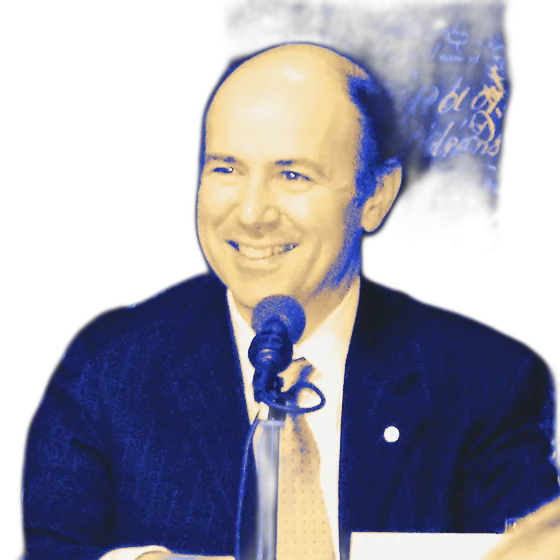
Portrait source: photograph by Betsy Devine (User:Betsythedevine), CC BY 2.5

Records

Success in creating AI would be the biggest event in human history. Unfortunately, it might also be the last, unless we learn how to avoid the risks.

Frank Wilczek

MIT physicist and 2004 Nobel laureate

From a co-authored text. Not one person's spoken words.

Co-authored with Stephen Hawking

In a co-authored op-ed, Frank Wilczek wrote that creating AI would be humanity's biggest event and might be its last unless people learn to avoid the risks.

MIT physics professor and 2004 Nobel laureateDate not establishedThe Independent co-authored op-ed

Context and checks

Surrounding words

to offer is a product of human intelligence; we cannot predict what we might achieve when this intelligence is magnified by the tools that AI may provide, but the eradication of war, disease, and poverty would be high on anyone's list. Success in creating AI would be the biggest event in human history. Unfortunately, it might also be the last, unless we learn how to avoid the risks. In the near term, world militaries are considering autonomous-weapon systems that can choose and eliminate targets; the UN and Human Rights Watch have advocated a treaty banning such weapons.

What this quote does not say

  • The full op-ed balances this risk with possible benefits, including eradicating war, disease, and poverty, and discusses autonomous weapons, economic dislocation, and loss of control as distinct time-horizon risks; none undercuts the quoted existential possibility.

How this was checked

  • Quote located in the captured page; spacing normalised for display.

Reviewed by

an AI reviewer that read the whole source · an automatic character-by-character check

Well, if I wrote the letter, which is what happened the first time around, though it got edited. Well, it depends what it says. It's a nuanced question. To me, I don't think we should be too frightened and hide under our desks like in fallout shelters because the AIs are out to get us. But I do think there are real issues, they're addressable issues, and I think if they're attended to, AI will be very beneficial.

Frank Wilczek

MIT physicist and 2004 Nobel laureate

Asked whether he would sign a letter with Stephen Hawking about AI and its dangers, Wilczek said it depends what it says, that we should not be too frightened that the AIs are out to get us, and that AI has real, addressable issues which if attended to would make it very beneficial.

Nobel Prize-winning physicist affiliated with Arizona State UniversityPublished August 5, 2023 · date of remarks not establishedThe Science Show, ABC Radio National

Context and checks

Surrounding words

Robyn Williams: Thought experiment; if Stephen Hawking were here still, and he asked you to sign a letter with him about AI and its dangers, would you? Frank Wilczek: Well, if I wrote the letter, which is what happened the first time around, though it got edited. Well, it depends what it says. It's a nuanced question. To me, I don't think we should be too frightened and hide under our desks like in fallout shelters because the AIs are out to get us. But I do think there are real issues, they're addressable issues, and I think if they're attended to, AI will be very beneficial. Robyn Williams: As long as they don't go to war. Frank Wilczek: Well, one of the essential things is that we pay special attention to military uses of AI.

How this was checked

  • Quote matched character-for-character against the captured page.

Reviewed by

an AI reviewer that read the whole source · an automatic character-by-character check

Statements they signed

FROM THE SIGNED STATEMENT

One can imagine such technology outsmarting financial markets, out-inventing human researchers, out-manipulating human leaders, and developing weapons we cannot even understand.

Signed statement:Transcendence Looks at the Implications of AI” (Hawking, Russell, Tegmark, Wilczek)

Frank Wilczek

MIT physicist and 2004 Nobel laureate

Signed as part of a group statement. Not spoken.

Frank Wilczek coauthored “Transcendence Looks at the Implications of AI,” which said creating AI could be the biggest event in human history but also the last unless people learn how to avoid the risks.

a physics professor at the MIT and a 2004 Nobel laureate for his work on the strong nuclear force.Date not establishedTranscendence Looks at the Implications of AI

Context and checks

Surrounding words

Max Tegmark is a physics professor at the Massachusetts Institute of Technology (MIT) and the author of 'Our Mathematical Universe'. Frank Wilczek is a physics professor at the MIT and a 2004 Nobel laureate for his work on the strong nuclear force.

How this was checked

  • The organiser's own roster lists this person as a signer.

Reviewed by

an AI reviewer that read the whole source