Back to everyone

Doctors, scientists and economists

David Autor

MIT labor economist

5 records

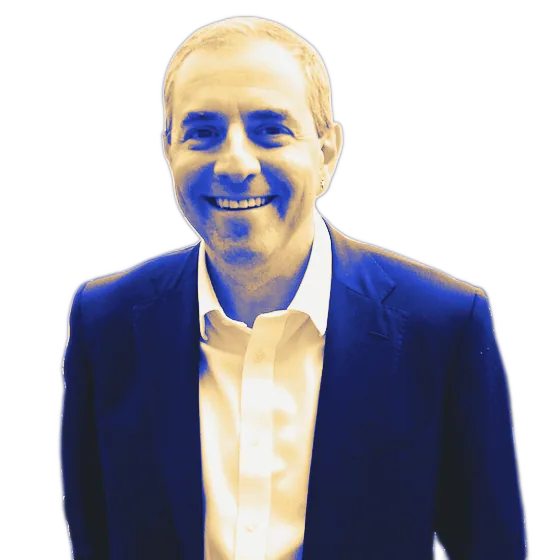
Portrait source: MysteriousTrousers, CC BY 4.0

Records

One is regulation. Of course, that’s the most obvious, right? We should be concerned about risk and safety. We should be concerned about intrusive monitoring, non-consensual pornography, misinformation and deep fakes. That’s one thing.

David Autor

MIT labor economist

Asked what role government should play in the AI era, David Autor said regulation was the most obvious role and named intrusive monitoring, nonconsensual pornography, misinformation, and deepfakes as concerns.

Daniel (1972) and Gail Rubinfeld Professor, Margaret MacVicar Faculty Fellow, and Google Technology and Society Visiting Fellow at MITDate not establishedSocial Science Bites podcast

Context and checks

Surrounding words

If that’s right, what is the role for government? David Autor: Yeah. I mean, I think the role for government in the AI era is a few things. One is regulation. Of course, that’s the most obvious, right? We should be concerned about risk and safety. We should be concerned about intrusive monitoring, non-consensual pornography, misinformation and deep fakes. That’s one thing. The second thing is the government should be investing we’re in a real technology race with very, very fleet-footed competitors, and we need to invest in research.

What this quote does not say

  • Later in the interview, Autor said government should also invest in research and steer AI toward health care and education; he described himself as neither an AI doomer nor an AI utopian.

How this was checked

  • Quote matched character-for-character against the captured page.

Reviewed by

an AI reviewer that read the whole source · an automatic character-by-character check

AI presents obvious threats to workers and the labour force. While machines of the past could only automate routine tasks with clear rules, AI can quickly adapt to problems that require creativity and judgment. It seems reasonable to worry that AI will suddenly make huge swaths of human work redundant. I believe these concerns are somewhat misplaced, however.

David Autor

MIT labor economist

In testimony to a Canadian parliamentary committee, David Autor said AI poses threats to workers but that fears it will suddenly make huge swaths of human work redundant are somewhat misplaced.

Ford Professor of Economics at MIT and co-director of the MIT Shaping the Future of Work initiativeDate not establishedHouse of Commons of Canada Standing Committee on Human Resources, Skills and Social Development and the Status of Persons with Disabilities, Meeting 89

Context and checks

Surrounding words

I am honoured to speak with you today about my research on artificial intelligence and the future of work, and I apologize for my cold. AI presents obvious threats to workers and the labour force. While machines of the past could only automate routine tasks with clear rules, AI can quickly adapt to problems that require creativity and judgment. It seems reasonable to worry that AI will suddenly make huge swaths of human work redundant. I believe these concerns are somewhat misplaced, however. Strong demand for labour has persisted throughout past periods of technical change, like the industrial or computing revolutions, and all signs point to growing labour scarcity, not the opposite, in most industrialized countries,

What this quote does not say

  • Later in the same testimony, Autor said AI could create new opportunities for workers without college degrees, while adding that this positive future was not guaranteed and would require collective choices.

How this was checked

  • Quote matched character-for-character against the captured page.

Reviewed by

an AI reviewer that read the whole source · an automatic character-by-character check

In terms of how many jobs have been lost to AI, we really don’t know. And the problem that makes this difficult is that the economy is, in general, undergoing a vastly slowing labor market. And so employment growth among young people is down in every sector, including among non-college, among college. And even some of the reports of decline of software developers, that starts before the release of ChatGPT.

Exact quote, beginning

David Autor

MIT labor economist

In a January 2026 podcast interview, David Autor said that in terms of how many jobs have been lost to AI “we really don't know,” because the labor market is broadly slowing and the reported decline in software-developer employment began before ChatGPT was released.

Professor at the Massachusetts Institute of Technology and labor economistPublished January 13, 2026 · date of remarks not establishedThe Ongoing Transformation podcast

Context and checks

Surrounding words

So it’s caught on incredibly quickly. It’s used at home, it’s used at work, it’s used by people of all ages, and it’s used now equally by men and women and across education groups. So it’s pretty broadly used. In terms of how many jobs have been lost to AI, we really don’t know. And the problem that makes this difficult is that the economy is, in general, undergoing a vastly slowing labor market. And so employment growth among young people is down in every sector, including among non-college, among college. And even some of the reports of decline of software developers, that starts before the release of ChatGPT. So the peak is in April of 2022, ChatGPT is released in November of 2022. So it’s not even clear that we should attribute that. There are certain occupations that I think are much more threatened than software development, like language translation or medical transcription.

What this quote does not say

  • The qualification concerns evidence for current job losses, not Autor's view of all future AI-driven displacement. Later in the same interview he says language translation and medical transcription have already been heavily displaced, that he is worried for illustrators, and that his central concern is the “devaluation of expertise” and the scarring caused by fast transitions.
  • The transcript is the publisher's own; no independent recording was checked against it.

How this was checked

  • Quote matched character-for-character against the captured page.

Reviewed by

an AI reviewer that read the whole source · an automatic character-by-character check

Statements they signed

FROM THE SIGNED STATEMENT

Like drugs, chatbots must undergo pre-deployment testing for increased suicidal ideation, exacerbation of mental health disorders, escalation of acute crisis situations, and other known harms.

Signed statement:Pro-Human AI Declaration” (FLI/broad coalition)

David Autor

MIT labor economist

Signed as part of a group statement. Not spoken.

David Autor was listed as a signer of the Pro-Human AI Declaration, which says AI should serve people, remain under human control, and not replace them.

Professor, Co-director, Stone Center on Inequality and Shaping the Future of Work, MIT Department of Economics,Date not establishedPro-Human AI Declaration

Context and checks

Surrounding words

Tegmark Future of Life Institute Clark Barrett Professor of Computer Science, Stanford Moshe Vardi Professor of Computational Engineering, Rice University, Member: US National Academy of Engineering and National Academy of Sciences David Autor Professor, Co-director, Stone Center on Inequality and Shaping the Future of Work, MIT Department of Economics, Meredith Whittaker President, Signal Foundation Emilia Javorsky Future of Life Institute Jean Oelwang Founding CEO, Virgin

What this quote does not say

  • The roster's wording for Autor's role ends with a comma: “Professor, Co-director, Stone Center on Inequality and Shaping the Future of Work, MIT Department of Economics,”

How this was checked

  • The organiser's own roster lists this person as a signer.

Reviewed by

an AI reviewer that read the whole source

FROM THE SIGNED STATEMENT

It could bring risks, including large-scale job displacement, as well as opportunities such as major gains in living standards.

Signed statement:We Must Act Now” (Stanford Digital Economy Lab/economists)

David Autor

MIT labor economist

Signed as part of a group statement. Not spoken.

David Autor was listed as a signer of We Must Act Now, which calls for incentives, guardrails, and institutions to steer powerful AI toward complementing people and benefiting society.

Date not establishedWe Must Act Now

Context and checks

Surrounding words

Agrawal, University of Toronto Anton Korinek, University of Virginia and Anthropic Tom Cunningham, METR Michael Spence, New York University* Daron Acemoglu, MIT* Diane Coyle, University of Cambridge Chad Jones, Stanford University David Autor, MIT Joseph Stiglitz, Columbia University* Niall Ferguson, Stanford University Jason Furman, Harvard University Simon Johnson, MIT* Christopher A.

How this was checked

  • The organiser's own roster lists this person as a signer.

Reviewed by

an AI reviewer that read the whole source