Back to everyone

Business leaders

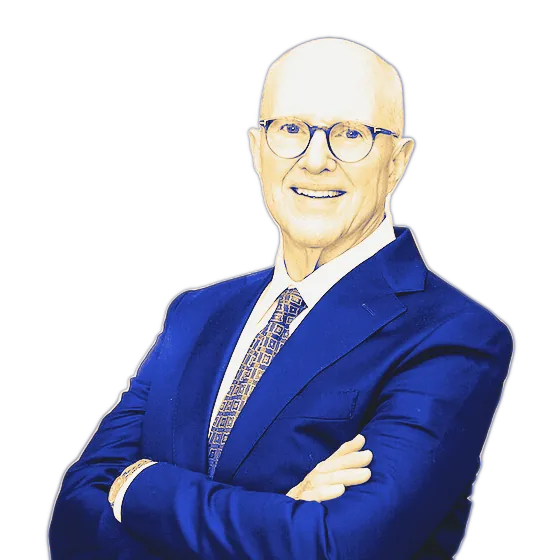
Craig Mundie

former chief research and strategy officer at Microsoft

4 records

Portrait source: Audragm, CC BY-SA 4.0

Records

Once released from their algorithmic cages into the physical world, AI machines could be difficult to recapture. For this and many other reasons, we must not entrust digital agents with control over direct physical experiments. So long as AIs remain flawed—and they are still very flawed—this is a necessary precaution.

Craig Mundie

former chief research and strategy officer at Microsoft

In a November 2024 Atlantic essay co-written with Henry Kissinger and Eric Schmidt, Mundie wrote that AI machines released from their algorithmic cages into the physical world could be difficult to recapture, and that so long as AIs remain flawed we must not entrust digital agents with control over direct physical experiments.

former chief research and strategy officer at MicrosoftPublished November 12, 2024 · date of remarks not establishedThe Atlantic (Ideas), essay adapted from the book Genesis: Artificial Intelligence, Hope, and the Human Spirit

Context and checks

Surrounding words

In the physical realm, humans could quickly go from being AI’s necessary partner to being a limitation or a competitor. Once released from their algorithmic cages into the physical world, AI machines could be difficult to recapture. For this and many other reasons, we must not entrust digital agents with control over direct physical experiments. So long as AIs remain flawed—and they are still very flawed—this is a necessary precaution. AI can already compare concepts, make counterarguments, and generate analogies. It is taking its first steps toward the evaluation of truth and the achievement of direct kinetic effects.

What this quote does not say

  • Jointly authored with Henry Kissinger and Eric Schmidt and written in the first-person plural, so it establishes Mundie's co-authorship of the claim rather than sole authorship.
  • The passage is a precaution about physical experiments; the same essay separately argues for relinquishing tactical control of AI decisions to AI systems as the better route to safety, so this is not a general call for human control.

How this was checked

  • Quote located in the captured page; spacing normalised for display.

Reviewed by

an AI reviewer that read the whole source · an automatic character-by-character check

We believe that we’re on the cusp of an epoch of coexistence and coevolution with AI—and that is more likely than doomsday scenarios of extinction or the loss of control, if and only if we act now.

Craig Mundie

former chief research and strategy officer at Microsoft

In a November 2024 TIME essay co-written with Eric Schmidt, Mundie wrote that an epoch of coexistence and coevolution with AI is more likely than doomsday scenarios of extinction or the loss of control, “if and only if we act now.”

President of Mundie & AssociatesPublished November 21, 2024 · date of remarks not establishedTIME100 Voices

Context and checks

Surrounding words

Although much has been said about the arrival of AI, in particular about its destructive consequences, not enough of the discussion has been dedicated to considering this fundamental question: What does coevolution with AI look like? We believe that we’re on the cusp of an epoch of coexistence and coevolution with AI—and that is more likely than doomsday scenarios of extinction or the loss of control, if and only if we act now. While the recent U.S. election was a turning point in many ways, it’s easy to ignore how it coincided with a watershed moment for our society: AI is already here, and we’ll likely see the dawn of artificial general intelligence, or AGI,

What this quote does not say

  • The passage is jointly authored with Eric Schmidt (Schmidt is the first byline) and uses "we", so it establishes Mundie's co-authorship of the claim rather than sole authorship.
  • This is a claim about relative likelihood conditional on acting now, not a rejection of extinction or loss-of-control risk.

How this was checked

  • Quote matched character-for-character against the captured page.

Reviewed by

an AI reviewer that read the whole source · an automatic character-by-character check

How might we get there? Before any AI system gets activated, a consortium of experts from private industry and academia, with government support, would need to design a set of validation tests for certification of the AI’s “grounding model” as both legal and safe. Safety-focused labs and nonprofits could test AIs on their risks, recommending additional training and validation strategies as needed.

Exact quote, beginning

Craig Mundie

former chief research and strategy officer at Microsoft

In a November 2024 Atlantic essay co-written with Henry Kissinger and Eric Schmidt, Mundie wrote that before any AI system is activated a consortium of industry and academic experts should design validation tests certifying it as legal and safe, that government regulators should set standards and audit models for compliance, that every model should be thoroughly reviewed before public release — including for how hard it would be to untrain it if it shows dangerous capacities — and that severe penalties should fall on anyone responsible for models found evading legal strictures.

former chief research and strategy officer at MicrosoftPublished November 12, 2024 · date of remarks not establishedThe Atlantic (Ideas), essay adapted from the book Genesis: Artificial Intelligence, Hope, and the Human Spirit

Context and checks

Surrounding words

Finally, undesirable behavior by a machine—whether due to accidental mishaps, unexpected system interactions, or intentional misuses—must be not merely prohibited but entirely prevented. Any punishment would come too late. How might we get there? Before any AI system gets activated, a consortium of experts from private industry and academia, with government support, would need to design a set of validation tests for certification of the AI’s “grounding model” as both legal and safe. Safety-focused labs and nonprofits could test AIs on their risks, recommending additional training and validation strategies as needed. Government regulators will have to determine certain standards and shape audit models for assuring AIs’ compliance. Before any AI model can be released publicly, it must be thoroughly reviewed for both its adherence to prescribed laws and mores and for the degree of difficulty involved in untraining it, in the event that it exhibits dangerous capacities. Severe penalties must be imposed on anyone responsible for models found to have been evading legal strictures. Documentation of a model’s evolution, perhaps recorded by monitoring AIs, would be essential to ensuring that models do not become black boxes that erase themselves and become safe havens for illegality.

What this quote does not say

  • Jointly authored with Henry Kissinger and Eric Schmidt and written in the first-person plural, so it establishes Mundie's co-authorship of the proposal rather than sole authorship.
  • The text proposes a broad control regime but does not specify a jurisdiction or implementing institution.

How this was checked

  • Quote located in the captured page; spacing normalised for display.

Reviewed by

an AI reviewer that read the whole source · an automatic character-by-character check

Statements they signed

FROM THE SIGNED STATEMENT

In the near future, AI may put high-consequence biological capabilities—potentially including the design of pathogens more dangerous than anything found in nature—within reach of actors who cannot access them today.

Signed statement:IDAIS London Statement” (IDAIS)

Craig Mundie

former chief research and strategy officer at Microsoft

Signed as part of a group statement. Not spoken.

Craig Mundie signed the IDAIS London Statement, which calls on governments to prevent AI-enabled cyberattacks and biological misuse.

President Mundie & AssociatesDate not establishedIDAIS London Statement

Context and checks

Surrounding words

University Former President Baidu Stuart Russell Professor and Smith-Zadeh Chair in Engineering University of California, Berkeley Founder of Center for Human-Compatible Artificial Intelligence (CHAI) University of California, Berkeley Craig Mundie President Mundie & Associates Fu Ying 傅莹 Xue Lan 薛澜 Dean, Schwarzman College Tsinghua University Director, Institute for AI International Governance (I-AIIG) Tsinghua University Max Tegmark Professor, Center for Brains, Minds and Machines

What this quote does not say

  • The roster's wording for Mundie's role and affiliation is “President” followed by “Mundie & Associates.”

How this was checked

  • The organiser's own roster lists this person as a signer.

Reviewed by

an AI reviewer that read the whole source