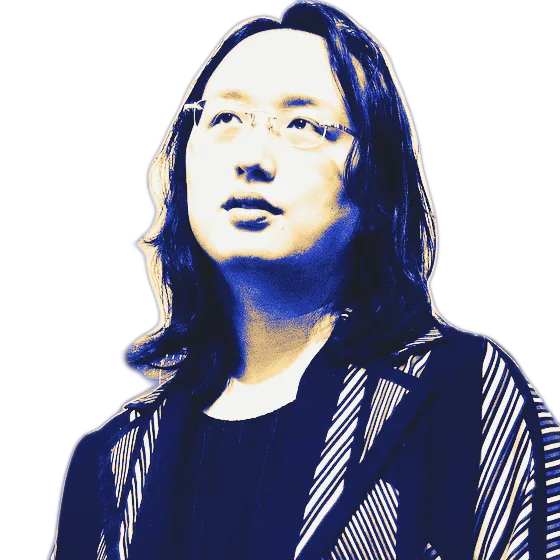
This is where AI could make things much worse. It can generate persuasive content at volume, tailor emotional cues, simulate consensus and flood every channel with synthetic certainty. If deployed inside the old logic of the feed, it will turn existing polarization into a perpetual engine for schismogenesis.
Audrey Tang
Taiwan's cyber ambassador; Taiwan's first digital affairs minister
In a July 2026 essay, Audrey Tang wrote that AI could make online polarization much worse by generating persuasive content at volume, tailoring emotional cues, simulating consensus and flooding every channel with synthetic certainty, and that deployed inside the old logic of the feed it will turn existing polarization into a perpetual engine.
Taiwan's cyber-ambassadorPublished July 15, 2026 · date of remarks not establishedSigned essay, the Humanist Review, Issue 01 (People & Technology)
Context and checks
Surrounding words
They adopt them because the social machinery around those beliefs moves faster than reflection can keep up. By the time a rumor is challenged, a group identity may already have formed around it. This is where AI could make things much worse. It can generate persuasive content at volume, tailor emotional cues, simulate consensus and flood every channel with synthetic certainty. If deployed inside the old logic of the feed, it will turn existing polarization into a perpetual engine for schismogenesis. But AI can also be used to counter that logic. It can annotate before outrage calcifies. It can translate between communities where moral languages differ even when practical hopes overlap.
What this quote does not say
- The passage predicts an effect if AI is deployed within the existing feed architecture; it does not claim that every AI deployment has this effect.
- The term schismogenesis is not defined in the selected passage, although the surrounding section describes polarization and conflict escalation.
How this was checked
- Quote matched character-for-character against the captured page.
Reviewed by
an AI reviewer that read the whole source · an automatic character-by-character check