Back to everyone

People who build AI

Arvind Narayanan

Princeton computer science professor, co-author of AI Snake Oil

3 records

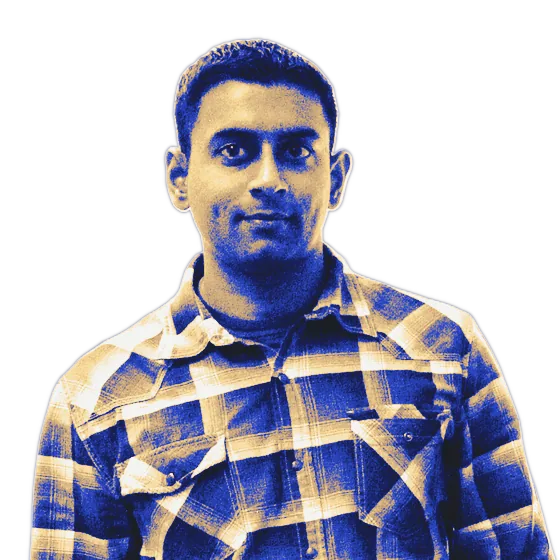
Portrait source: Robert Scoble, CC BY 2.0

Records

We view AI as a tool that we can and should remain in control of, and we argue that this goal does not require drastic policy interventions or technical breakthroughs. We do not think that viewing AI as a humanlike intelligence is currently accurate or useful for understanding its societal impacts, nor is it likely to be in our vision of the future.

Arvind Narayanan

Princeton computer science professor, co-author of AI Snake Oil

In an April 2025 essay co-authored with Sayash Kapoor, Narayanan wrote that AI is “a tool that we can and should remain in control of,” that this “does not require drastic policy interventions or technical breakthroughs,” and that viewing AI as a humanlike intelligence is not “currently accurate or useful.”

Professor of computer science at Princeton UniversityPublished April 15, 2025 · date of remarks not establishedEssays and Scholarship

Context and checks

Surrounding words

The statement “AI is normal technology” is three things: a description of current AI, a prediction about the foreseeable future of AI, and a prescription about how we should treat it. We view AI as a tool that we can and should remain in control of, and we argue that this goal does not require drastic policy interventions or technical breakthroughs. We do not think that viewing AI as a humanlike intelligence is currently accurate or useful for understanding its societal impacts, nor is it likely to be in our vision of the future. The normal technology frame is about the relationship between technology and society. It rejects technological determinism, especially the notion of AI itself as an agent in determining its future.

What this quote does not say

  • The passage is jointly authored with Sayash Kapoor, so it establishes Narayanan’s co-authored position rather than uniquely spoken wording.
  • The essay describes the authors’ median-outcome framework and does not claim certainty about all possible futures.

How this was checked

  • Quote matched character-for-character against the captured page.

Reviewed by

an AI reviewer that read the whole source · an automatic character-by-character check

Statements they signed

FROM THE SIGNED STATEMENT

It could bring risks, including large-scale job displacement, as well as opportunities such as major gains in living standards.

Signed statement:We Must Act Now” (Stanford Digital Economy Lab/economists)

Arvind Narayanan

Princeton computer science professor, co-author of AI Snake Oil

Signed as part of a group statement. Not spoken.

Arvind Narayanan was listed as a signer of We Must Act Now, which said AI could transform the economy and called for guardrails and institutions to keep it beneficial.

Princeton UniversityDate not establishedWe Must Act Now

Context and checks

Surrounding words

University of British Columbia Jeremy Howard, fast.ai Matt Gentzkow, Stanford University Bharat Chandar, Stanford University Jiaxin Pei, Stanford University Sarah Bana, Chapman University Ramiz Razzak Molly Kinder, Breakwater Initiative Arvind Narayanan, Princeton University Laura Tyson, University of California, Berkeley Tristan Harris, Center for Humane Technology Christie Ko, Stanford University Susan Young, Stanford University *Nobel laureate Show all

What this quote does not say

  • Roster observed 2026-08-19; signing date unknown.
  • The role is copied from the roster's wording: 'Princeton University'.

How this was checked

  • The organiser's own roster lists this person as a signer.

Reviewed by

an AI reviewer that read the whole source

FROM THE SIGNED STATEMENT

When it comes to AI safety and security, openness is an antidote, not a poison.

Signed statement:Joint Statement on AI Safety and Openness” (Mozilla)

Arvind Narayanan

Princeton computer science professor, co-author of AI Snake Oil

Signed as part of a group statement. Not spoken.

Arvind Narayanan was listed as a signer of the Joint Statement on AI Safety and Openness, which said open, responsible, and transparent approaches are critical to AI safety and security.

Princeton UniversityDate not establishedJoint Statement on AI Safety and Openness

Context and checks

Surrounding words

Optimistic - Audrey Tang, Minister of Digital Affairs, Taiwan - Jimmy Wales, Wikimedia Foundation - Krishna Gade, Fiddler AI - John Borthwick, Betaworks - Karim Lakhani, Harvard Business School - Stefano Maffulli, Open Source Initiative - Arvind Narayanan, Princeton University - Aviya Skowron, EleutherAI - Catherine Stihler, Creative Commons - Nabiha Syed, The Markup - Tim O’Reilly, O'Reilly Media - Nicole Wong, Former Deputy U.S.

What this quote does not say

  • Roster observed 2026-08-19; signing date unknown.
  • The role is copied from the roster's wording: 'Princeton University'.

How this was checked

  • The organiser's own roster lists this person as a signer.

Reviewed by

an AI reviewer that read the whole source