Back to everyone

Doctors, scientists and economists

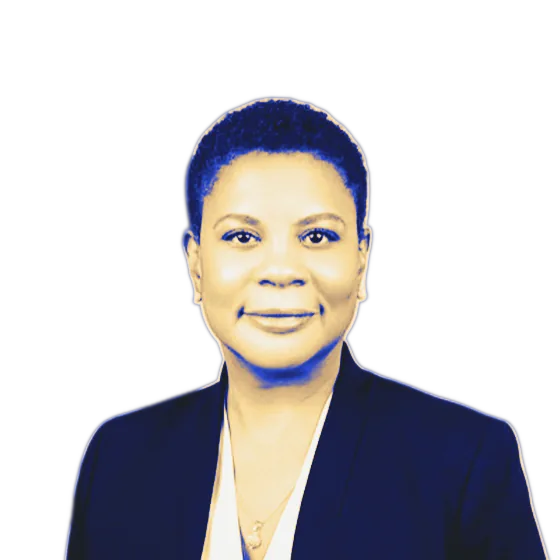
Alondra Nelson

Center for American Progress senior fellow and former White House science policy official

4 records

Portrait source: Executive Office of the President of the United States, Public domain

Records

And, this discussion is happening among more of us than ever before, including AI experts and developers; tech journalists and policymakers; legislators and civil society; consumers and creators; and those living today with some of the most pernicious harms of AI use, including false arrest and imprisonment and housing and medical discrimination. Acknowledging these real and immediate harms transpiring today does not require that we ignore the grave, future risks posed by AI.

Alondra Nelson

Center for American Progress senior fellow and former White House science policy official

In an April 2023 Center for American Progress article, Alondra Nelson wrote that people are already living with harms of AI use including false arrest and imprisonment and housing and medical discrimination, and that acknowledging those harms does not require ignoring the grave future risks posed by AI.

Former principal deputy director for science and society and acting director of the White House Office of Science and Technology PolicyPublished April 11, 2023 · date of remarks not establishedCenter for American Progress article

Context and checks

Surrounding words

AI is very complex, but the idea of it is no longer a mere abstraction for many. Now, for the first time, we are having a debate about how AI should exist in our society. And, this discussion is happening among more of us than ever before, including AI experts and developers; tech journalists and policymakers; legislators and civil society; consumers and creators; and those living today with some of the most pernicious harms of AI use, including false arrest and imprisonment and housing and medical discrimination. Acknowledging these real and immediate harms transpiring today does not require that we ignore the grave, future risks posed by AI. Exploring and preparing to address that risk is the job of the president and his national security and human rights policymakers—and Congress should give him additional tools to do so.

What this quote does not say

  • The passage does not specify which future risks are grave, their probability, or their time horizon.
  • The article does not label the future risks catastrophic or existential.

How this was checked

  • Quote located in the captured page; spacing normalised for display.

Reviewed by

an AI reviewer that read the whole source · an automatic character-by-character check

Even amid polarization, potential exists for consensus around specific AI “red lines”—including some prohibitions that parallel the EU AI Act’s “unacceptable practices.” This includes, for example, prohibitions on real-time remote biometric tracking—or the use of technologies such as facial recognition to identify individuals in real time, often in public spaces—as well as others that extend even

Alondra Nelson

Center for American Progress senior fellow and former White House science policy official

In an article about U.S. and European AI policy, Alondra Nelson wrote that there may be consensus across political divides on some AI prohibitions, including real-time biometric tracking.

Distinguished senior fellow at the Center for American ProgressDate not establishedCenter for American Progress report chapter

Context and checks

Surrounding words

In the current environment, there may be opportunities to pursue targeted safeguards capable of winning support across political divides. Even amid polarization, potential exists for consensus around specific AI “red lines”—including some prohibitions that parallel the EU AI Act’s “unacceptable practices.” This includes, for example, prohibitions on real-time remote biometric tracking—or the use of technologies such as facial recognition to identify individuals in real time, often in public spaces—as well as others that extend even further, such as on automated termination of employment or algorithmic denial of health insurance claims.

How this was checked

  • Quote matched character-for-character against the captured page.

Reviewed by

an AI reviewer that read the whole source · an automatic character-by-character check

Statements they signed

FROM THE SIGNED STATEMENT

There is already a decade’s worth of evidence on the harms associated with existing AI systems: from discrimination, to security and privacy lapses, to competition concerns, to informational harms.

Signed statement:Post-Summit Civil-Society Communiqué” (Bletchley civil-society attendees)

Alondra Nelson

Center for American Progress senior fellow and former White House science policy official

Signed as part of a group statement. Not spoken.

Alondra Nelson was listed as a signer of the Post-Summit Civil-Society Communiqué, which called on governments to regulate current AI harms and protect the public.

Ph.D., Institute for Advanced Study (U.S.)Date not establishedPost-Summit Civil-Society Communiqué

Context and checks

Surrounding words

Signatories: Ada Lovelace Institute AI Now Institute Algorithmic Justice League Alondra Nelson, Ph.D., Institute for Advanced Study (U.S.) Camille Francois, Columbia University’s Institute for Global Politics Center for Democracy & Technology Centre for Long-Term Resilience Chinasa T.

What this quote does not say

  • The role is copied from the roster's wording: 'Ph.D., Institute for Advanced Study (U.S.)'.

How this was checked

  • The organiser's own roster lists this person as a signer.

Reviewed by

an AI reviewer that read the whole source

FROM THE SIGNED STATEMENT

When it comes to AI safety and security, openness is an antidote, not a poison.

Signed statement:Joint Statement on AI Safety and Openness” (Mozilla)

Alondra Nelson

Center for American Progress senior fellow and former White House science policy official

Signed as part of a group statement. Not spoken.

Alondra Nelson was listed as a signer of the Joint Statement on AI Safety and Openness, which said open, responsible, and transparent approaches are critical to AI safety and security.

Institute for Advanced StudyDate not establishedJoint Statement on AI Safety and Openness

Context and checks

Surrounding words

Signatories - Camille François, Columbia University - Mark Surman, Mozilla - Deborah Raji, UC Berkeley - Maria Ressa Rappler, Nobel Peace Prize Laureate - Stella Biderman, EleutherAI - Alondra Nelson, Institute for Advanced Study - Arthur Mensch, MistralAI - Marietje Schaake, Stanford University - Abeba Birhane, Mozilla Fellow - Bruce Schneier, Berkman Center - Mitchell Baker, Mozilla - Bruno Sportisse, INRIA - Anne Bouverot, Ecole

What this quote does not say

  • Roster observed 2026-08-19; signing date unknown.
  • The role is copied from the roster's wording: 'Institute for Advanced Study'.

How this was checked

  • The organiser's own roster lists this person as a signer.

Reviewed by

an AI reviewer that read the whole source